

Outgoing Peace Council Chair, Most Rev Professor Emmanuel Asante, has said the many promises contained in the manifestos of the political parties mean nothing without national peace.
He has, therefore, called on political activists to promote peace in the lead-up to the upcoming elections on December 7, 2020.
“All your manifestoes and promises will come to nought in the absence of peace,” he said.
His comments follow, among other things, the recent killing of a senior officer of the National Identification Authority (NIA) who was shot dead after gunmen attacked a National Peace Council delegation at a district in the Northern Region.
“I think the Church must seriously pray about what is happening in the country while we teach people and ask them to be careful, not to do anything that will promote violence,” he admonished.
The outgoing Peace Council Chair wants Ghanaians to grow the culture of peace.
He made the comments on a Christian programme on Accra-based Joy FM.
Manifesto promises mean nothing without peace – Peace Council Chair
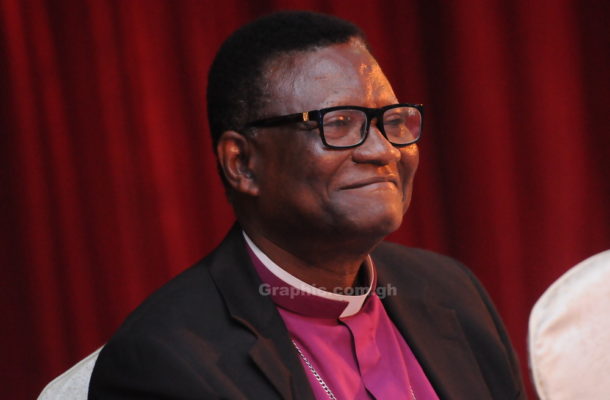
Ghanaian youth being used for violence while politicians, wives enjoy – Otumfuo
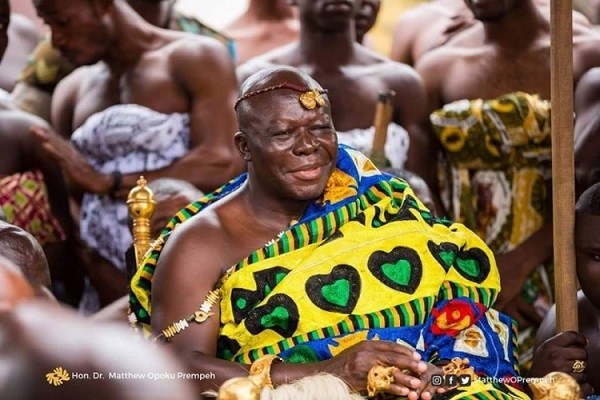
The Asantehene, Otumfuo Osei Tutu II has observed that while the youth allow themselves to be tools of violence during elections, the politicians who are their paymasters enjoy life with their families as they have absolutely nothing to lose.
“The youth they will come and deceive you while their children and wives are home enjoying. Why will you allow yourselves to be deceived into engaging in violence when the person who contracted you is not involved”, he asked.
The revered King noted that politics is a contest of ideas and not about violence urging the youth not to allow themselves to be used for violent activities as they are the bigger losers in the end.
While charging the Inspector-General of Police (IGP) Mr. James Oppong-Boanuh and sister security agencies to maintain law and order before, during and after the 2020 polls, he was optimistic they will do that professionally.
“The peace of the elections is in your hands. The IGP has assured that the police are ready for the exercise. Anybody who attempts to cause trouble should be dealt with lawfully. They may be some bad nuts among you but generally, you have proven beyond reasonable doubts that you can do the job properly”, he stated.
The IGP on his part appealed to Ghanaians to go to the polls peacefully and refrain from fomenting trouble, adding that the law would catch up with anyone who faulted the electoral rules.
Mr Oppong-Boanuh said the police had identified some election hotspots in the country and was working to beef up security in those areas to ensure peace.
The IGP also inspected a simulation exercise organized by the Regional Police Command at the Police Training School in Patasi, Kumasi to demonstrate to the public the preparedness of the police to handle any misfortune during the election’s day.
Accompanying the IGP were; COP Mr George Alex Mensah Director-General of Police Services, COP Maame Yaa Tiwaa Addo- Danquah(Mrs) Director-General Welfare, COP Kwaku Boadu-Peprah Director-General Operations and Chief Staff Officer ACP Joseph Owusu-Ansah.
Let’s approach December polls with peace – Catholic Bishops Conference
The Most Reverend Phillip Naameh, President of the Ghana Catholic Bishops Conference has called on Ghanaians to approach the upcoming presidential and parliamentary elections with peace.
He said elections were to deepen democracy by giving the citizenry the opportunity to choose a leader to champion development and not an avenue for fighting.
Speaking at the official welcome Mass of the Apostolic Nuncio to Ghana in Accra, Most Rev. Naameh said Ghanaians needed to speak out to both civil and religious authority with courage and point out hypocrisy, and reinstate justice and peace as the nation prepared to go to the polls.
He said peace remained a precondition for rapid socioeconomic development and underscored the need for the citizenry to be advocate of peace ahead of the polls and shun undemocratic tendencies, including; the use of money to influence election outcomes.
Most Rev. Naameh said monies spent to influence the electorate could be channeled into developmental projects for the people.
“Such projects will impact the lives of the people better than throwing monies at voters for their votes,” he said and charged the Nuncio of the Catholic Church in Ghana to “fear not” in the delivery of his assignments.
The Most Rev. Henry M. Jagodzinski, the Apostolic Nuncio to Ghana, extended greetings from the Holy Father, Pope Francis to the congregation in Ghana.
He said he felt at home with the love and hospitality given him by the Church and the people of Ghana.
The Nuncio, decorated the Archbishop of Accra, Archbishop John Bonaventure Kwofie with a pallium; an ecclesiastical vestment made of wool with six black crosses.
This is bestowed by the Holy See upon metropolitans and primates as a symbol of their conferred jurisdictional authorities.
He also donated some liturgical equipment to the Church.
The Archbishop Palmer Buckle, Vice President, Catholic Bishops Conference, said the Nuncio, arrived in the country in September but had to subject himself to COVID-19 protocols as required by Government.
He said the Nuncio, had earlier presented his credentials to the President of the Ghana Catholic Bishops Conference and the President of the Republic and welcomed the Nuncio on behalf of the entire Catholic congregation in Ghana.
The Mass was conducted under strict observation of COVID-19 protocols.
Why the needless tension every election year? – Otumfuo asks politicians
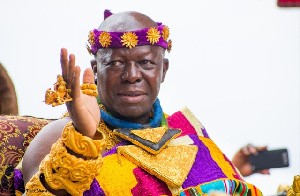
The Asantehene, Otumfuo Osei Tutu II is at a loss as to why politicians continue to stoke up tension each election year when there are processes enshrined in the constitution of the country.
He is of the view that these tensions by the political parties are needless and end up eroding the gains made by the country in its quest to achieve advance democracy.
Speaking during a courtesy call on him by the Inspector-General of Police (IGP), Mr James Oppong-Boanuh, the Asantehene noted that there processes governing the conduct of elections which ought to be respected by all.
To this end, he stated that parties that are not impressed with the process have the right to proceed to the courts where their grievances could be addressed and thereafter prepare for another polls.
“When we vote and you win, we will give it to you. When you lose at least in another four years, there will be another elections. This is what Ghanaians have accepted. If a political party loses an election, its supporters are not supposed to bring chaos into the country.
Otumfuo expressed confidence in the Police to deliver its mandate to protect the sanctity of the upcoming general elections, and also used the occasion to advise Police Officers to remain neutral in discharging their duties.
“They should wait for their time to win, or if in so much doubt, they can take the matter to court for peaceful settlement”, he stressed.
The IGP on his part said “I promise to maintain peace during the polls and I shall ensure it is done to that latter. I will use every means possible to protect Ghanaians.”
Demand accountability for your people – Star Ghana chair to traditional leaders

Chairperson of Star Ghana Foundation, Dr Esther Ofei Aboagye, has charged traditional leaders in Ghana to take on the responsibility of ensuring that political leaders are serving their people well.
According to Dr Esther Ofei Aboagye, citizens need non-partisan reliable representation to make their needs and concerns heard to political office holders and traditional authorities are best positioned for the task.
She said chiefs for instance, don’t always have to wait for politicians to call on them but rather summon them (politicians) to render accounts of their works to the people.
“You provide a channel for representing the needs and interest of your people. We want you to put these issues across without fear or favour. Sometimes Nananom undermine themselves by undervaluing the power that they have, the social capital that they have, the moral suasion that they have and move to one side or another or take on a certain posture on which political authorities are beholding to state.”
In an interview with Rev Dr Kwabena Opuni Frimpong on GTV’s ‘What is Next?’, Dr Aboagye stressed that chiefs can demand accountability from politicians because they are the custodians of the lands on which the politicians are serving.
“You can summon them, you can ask them to come and report to you, to come and share with you, what they intend to do to your people… please don’t be taken for granted.
“They are on your land, they are managing your people, they are supposed to be working in the interest of your people. You have the mobilizing power, you can do more, you can represent your people,” she added.
Dr Esther Ofei Aboagye added that as politicians make numerous promises to citizens, especially in election periods, questioning how these promises will be operationalized will put politicians on their toes.
“If we ask that question ‘how’ more often, maybe politicians will be compelled to think through the process. But very often we find that people are not ready, they don’t have an answer, they don’t have a process ready to operationalize the promises that they’ve made.”
Align party manifestos with long, short-term needs of electorate – Ofei-Aboagye to politicians
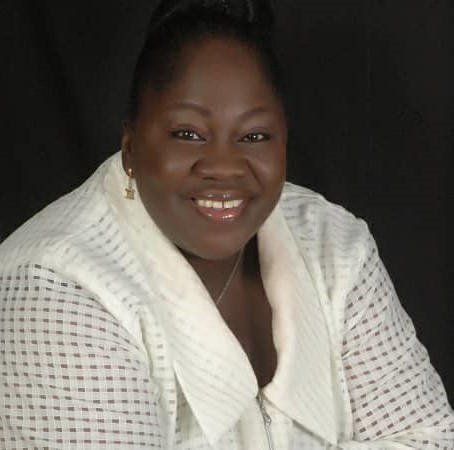
Chairperson of the STAR Ghana Foundation, Dr Esther Ofei-Aboayge, has advised political parties to strike a balance with meeting the long and short term needs of the electorate when outdooring their manifestos.
According to her, political parties while making short term promises to their electorate must consider the long-term implications that will not pave way for a comprise.
Speaking on the ‘What Is Next show hosted by Rev Dr Opuni-Frimpong, Dr Ofei-Aboagye said the key drivers of national development must be articulated in manifestos to transform the people and its economy.
“I expect researchers and writers of party manifestos to refer to the National Development Planning Commission for reports on performance, trends and where the needs and gaps of the nation can be tracked, gain technical advice that will also shape their party manifestos,” she explained.
“Again, I would expect every political party to have a research department that inspects work done by institutions like Institute of Statistical, Social and Economic Research (ISSER) and also what the Civil Society Groups (CSOs) will also generate to pick up on what the key issues are before putting out their manifestos”
She however recommended that the National Development Planning Commission (NDPC) became fully independent and politically empowered with the required logistics, qualified personnel to coordinate, and facilitate the parameters of Ghana’s national developmental drive.
EC to display names of multiple registrants and those who flouted regulations
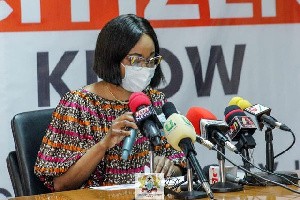
The Electoral Commission (EC) will start the voter exhibition exercise on Friday, 18 September 2020 and will be displaying the names of voters who registered more than once as well as those who flouted the rules and regulations of the registration exercise.
The exercise ends on 25 September 2020.
To make the exercise easier than it used to be, the EC has introduced a short message service (SMS) platform to enable registered voters to access their registration details.
The shortcode, 1422, will be activated throughout the period earmarked for the exhibition.
To access registration details, voters would have to text their voter ID card number to the shortcode.
The eight-day exercise is to give registered voters the opportunity to authenticate their personal information.
Speaking to journalists at a press conference on Thursday, 17 September 2020, EC Chair Jean Mensa said: “During this period of exhibition, the physical copies of the 2020 provisional voter register will be placed on all 33,367 exhibition centres to enable prospective voters verify their details as captured during the registration exercise and will request amendments or insertions where necessary”.
“It is important to note that all persons who registered at the various district offices must go to the assigned polling stations during the exhibition exercise and not the district offices.
“The Commission will also display an exceptions list, comprising the names of registered voters, who have flouted the regulations of the registration exercise.
“The persons on the exceptions list cannot vote in the upcoming election.
“The Commission will also display the multiples list”, she added.
She explained that: “This contains names of persons who have engaged in multiple registration and, therefore, cannot vote in the upcoming elections”.
She noted that voters who have already lost their ID cards can still verify their details.
“You can still check their voter registration details if you cannot find your ID card.
“Once you’re registered voter, your photograph and details are captured and will be displayed in the register.
“Note, however, that being in possession of the card, makes it much easier for you to check your details on the register”, she added.
Women’s citizenship not taken seriously in Ghana – Prof Takyiwaa Manuh
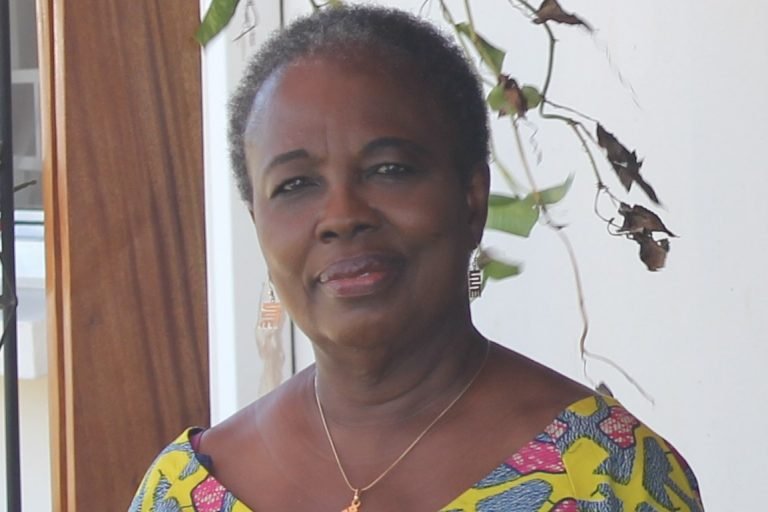
Former Director of the Institute of African Studies at the University of Ghana, Prof Abena Takyiwaa Manuh, has bemoaned the treatment women generally receive in Ghana.
According to her, though women make up a majority of the country’s population, their citizenship is not taken seriously.
In an interview with Dr Kwabena Opuni-Frimpong on ‘What is Next?’ Prof Manuh noted that women are usually treated as decorations in the country and are usually not given the opportunity to take serious decisions for themselves.
“Women are 51% of this country. Where are they when it comes to taking the serious decisions, where are they when it comes to industry. Women have not been integrated into the mainstream of this country that is why it is easy to present them as marginalised. They are vulnerable, we do things for them. They don’t do things themselves,” she said.
With the issue of witchcraft allegations against women becoming a major topic in the country after the gruesome murder of a 90-year-old woman at Kafaba in the Savannah region, Prof Manuh noted that giving women equal education and career opportunities will help end the witchcraft accusations against many vulnerable women in the country.
“If I didn’t have the opportunity, I’m 68, somebody could tag me as a witch. Nobody will dare call me a witch in my family or anywhere else. This is what happens when women are poor, uneducated, widows, women without children, they are the ones who become the witches.”
Prof Takyiwa Manuh believes the tagging of women as witches and their subsequent maltreatment will end if perpetrators are prosecuted and duly punished.
Source: www.ghanaweb.com
EC should generate future Voters Register from NIA – Attorney General

Gloria A. Akuffo, Minister of Justice and Attorney General, has asked the Electoral Commission (EC) to consider the usage of data from the National Identity Register owned by the National Identification Authority (NIA) for future voters register.
She said that would not only save the country some money but also promote national unity.
The Minister of Justice was speaking at the Ghana Bar Association (GBA) Webinar held at the Law court complex in Accra on the theme: “Enhancing National Cohesion: The essence of free, fair and responsible electoral process.”
Ms Akuffo noted that as at September 8, this year, over 15 million people had been registered by the NIA and 13 million cards issued with mob up exercises ongoing apart from efforts at opening NIA offices across the country and hopefully all Ghanaians would soon have the Ghana card.
Therefore, “It may be advisable for the EC to have recourse to NIA database for the compilation of Voters Register and adopt and designate the Ghana Card as identity card to be used in future elections in the country.”
The AG said, the approach would be consistent with the mandate of the EC under Article 42 of the Constitution.
“Moreover the Constitution does not restrict the EC as to, which document to be used in compiling or generating the register of voters provided the document guaranteed that only Ghanaians of 18 years and above and of sound mind are registered to vote in consonance with Article 42.
“No legal impediment prevent the EC from using the National Identity Register to compile the Register of Voters or the National Identity Card for the purpose of public election and referenda,” she said.
On the theme of the GBA, Ms Akuffo stressed the need to use the power of citizenship to keep and advance national cohesion through a systematic approach.
She, therefore, appealed to Ghanaians to remain committed in elevating the bar of civility and decency in the country’s public political discourse and voter mobilization.
“We must deliberately nurture the enablers of cohesion in our nation,“ she added.
Ms Akuffo said cohesiveness of the country was dependent on the extent to, which the nation strengthened and enabled elements of free, fair and responsible elections to manifest in Ghana’s body politic.
Accordingly, she said, ” We must reduce the tempo of political rivalries and antagonism that are characterized by ethnocentrism and premodal prejudice,” adding that ” these have the tendencies of threatening our national cohesion. “
The Minister observed that, Ghana risked weakening itself if it failed to deepen and widen the scale of public trust in the electoral systems.
For example, Ms Akuffo said, political parties ought to become greater platforms for mobilization of ideas that propelled the nation.
“We must work harder as a people to reduce the spate of Election-related violence,” she said.
Professor Henry Kwasi Prempeh, Executive Director, Centre for Democratic Development (CDD), noted that Ghana’s search for national cohesion dated back to the colonial era.
He, therefore, said Ghana’s achievement of national cohesion could be described as “a work in progress.”
Prof. Prempeh, observed that Ghana’s “Winner Takes All” regulations, protocol allocation of jobs, distribution of scholarships by governments did not augur well for national cohesion and appealed to political parties to reject ethnicity in their campaigns. He also entreated Chiefs, Civil Society Organizations and the Clergy not to fail the nation.
Source: www.ghanaweb.com
Stop begging politicians for favours and selling your heritage – Otumfuo to chiefs
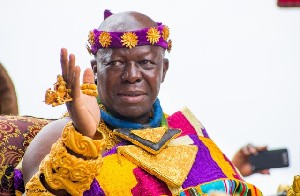
So far as chiefs in Ghana keep running to politicians for favours, the chieftaincy front will remain divided and eventually lose its relevance, Asantehene Otumfuo Osei Tutu II has warned his colleagues.
Admonishing the custodians of Ghana’s traditions and culture at the opening ceremony of the National House of Chiefs’ building, Otumfuo Osei Tutu II said: “As fathers of this nation, politics came to meet you and the politicians came later … but ask yourself, why are you not being recognised as such? It is because of our own doing”.
“We troop to politicians begging them for certain things so we’re divided in the front. You have to be united; you should know the essence of chieftaincy.
“Let them come to you for advice, let them come to you for direction… if we don’t do that and we go for our petty whatever benefits that we want, you’ll sell your heritage to the politician.
“I’m stressing this because chieftaincy has something to do for Ghana and if we don’t, the relevance of it will be questioned by the youth who don’t appreciate yesterday but today,” the Asante monarch added.
Built in 1949 by Otumfuo Sir Osei Agyemang II, the National House of Chief’s edifice was rendered dysfunctional for some time now due to lack of maintenance.
The building was renovated at the cost of GHS3.5 million, which has been reimbursed by the government.
President of the House, Togbe Afede XIV, expressed optimism that the office will help digitise all documents to guide their work.
Source: Class FM
Let’s end ‘monecracy’ in party politics — Speaker
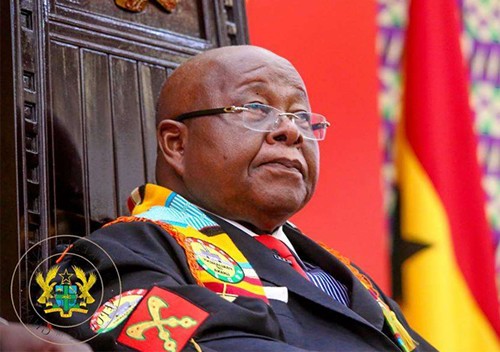
The Speaker of Parliament, Professor Aaron Mike Oquaye, has called for an end to monetisation which is rearing its ugly head in the country’s democratic practice, especially in the run-up to general elections.
He said allowing the practice to be a feature of the competitive democratic process only compromised good governance in a fledgeling democracy.
Ceiling election expenses
Addressing the end of the Second Meeting of the Fourth Session of Parliament last Friday, Prof. Oquaye said: “Monetisation of our democracy compromises the democratic process of good governance. As a country, we have not really captured the political will to arrest the situation.”
“We do not want funding to become the yardstick for the proliferation of political parties. We need a new law on political party income and expenditure generally, particularly with regard to putting a ceiling on election expenses,” he stated.
Prof. Oquaye said: “As we prepare for Election 2020, I am aware that members are concerned about election expenses. It is about time we critically examined issues of ‘monecracy’.”
Political Parties Support Fund
The Speaker said many democratic nations across the world had enacted laws on political party income and expenditure and established support funds for parties to curb expenses during elections.
He, therefore, urged Members of Parliament (MPs) and Ghanaians in general to consider the setting up of a Political Parties Support Fund (PPSF), which would be managed by a special committee of the Electoral Commission (EC).
“It is, therefore, important that we remove every element of mistrust in the EC, while we hold it accountable for its responsibilities. I have no shadow of doubt that the enactment of the Private Members’ Bill will significantly help us tighten gaps in our existing laws,” he said.
Avoid hate speech
Prof. Oquaye also urged MPs, as custodians of democracy, to be mindful of any hate speeches and political engagements which would “mar the beauty of our democracy”.
“It is important that, as legislators, we uphold the laws that we have passed. I am confident you will also educate your constituents on the Public Order Act, 1994 (Act 491), the Public Elections Regulations, 2016 (31.94) and other laws which are geared towards the preservation of our democracy.
“The peace of this country is essential for creating a congenial atmosphere for good governance. We need to appreciate the ingredients that make for democracy and good governance. Half democracy is no democracy,” he said.
History
The Speaker expressed happiness that for the first time in the country’s parliamentary history, the House adopted a motion for the enactment of a Private Members’ Bill on July 16, this year.
He expressed appreciation to the leadership of the House and all members, the STAR-Ghana Foundation, staff of the Legislative Drafting and Legal Services Department, experts from civil society organisations, the Deputy Attorney-General, Mr Godfred Dame, and legal luminaries, including Nana Dr S.K.B. Asante, for their support.
Crime against aged women
Recalling the recent lynching of a 90-year-old woman in public after she had been declared a witch by a spiritualist, Prof. Oquaye outlined measures to stop such heinous crimes against women.
He informed the House that he had received a petition from a research institute in Ghana for a law to be passed in Ghana on the declaration of some aged women as witches.
“I charged the consultant on the Private Members’ Bill, Mrs Ofori-Boateng, and Lawyer Sena to undertake a research. The proposed bill is being referred to our Constitutional and Legal Committee for further action.
“Highlights include the prohibition of professional witchcraft or wizardry, prohibition against the accusation of witchcraft, participation in the declaration of a person as a witch or wizard and penalty against a chief or headman encouraging witchcraft,” he said.
Sittings
The House held 52 plenary sittings in 13 weeks that saw 424 papers, including bills, constitutional/Legislative and Executive instruments, committee reports, conventions, loan agreements, motions, waivers, annual reports and resolutions presented to the House.
Bills passed
The bills that were passed into law were the Chartered Institute of Human Resource Management, Ghana Bill, 2019; the Chartered Institute of Marketing, Ghana Bill, 2019; the Land Bill, 2019, and the Education Regulatory Bodies Bill, 2019.
The rest were the Ghana Communication Technology University Bill 2020; the Revenue Administration (Amendment) Bill, 2020; the Aircraft Accident and Incident Investigation and Prevention Bureau Bill, 2020; the Minerals Income Investment Fund (Amendment) Bill, 2020; the Akenten Appiah-Menka University of Skills and Training and Entrepreneurial Development Bill, 2020; the Registration of Births and Deaths Bill, 2020; the Security and Intelligence Agencies Bill, 2020; the Development Financial Institutions Bill, 2020, and the Communication Services Tax (Amendment) Bill, 2020.
Instruments passed
Also, the following constitutional/legislative and Executive instruments were passed during the meeting.
They included the Ghana AIDS Commission Regulations, 2020; the Minerals and Mining (Mineral Operations Tracking of Earth Moving and Mining Equipment) Regulations, 2020; the Meat Inspection Regulations, 2020; the Local Government (Consultations) Regulations, 2020; the Chieftaincy (Membership of Regional Houses of Chiefs) Instrument, 2020, and the Public Elections Regulations, 2020.
The others are the Representation of the People (Parliamentary Constituencies) Instrument, 2020; the Engineering Council Regulations, 2020; the Public Financial Management (Public Investment Management) Regulations, 2020; the Transfer Pricing Regulations, 2020, and the Public Utilities Regulatory Commission (Consumer Service) Regulations, 2020.
Implement Constitutional Review Commission Report — Opuni-Frimpong

The Executive Director of the Alliance for Christian Advocacy Africa, Dr Kwabena Opuni-Frimpong, has entreated President Nana Addo Dankwa Akufo-Addo to implement the Constitutional Review Commission (CRC) Report.
“I will add my voice to those of the many people who are calling on the President to, even though he has some few months to end his tenure, pay attention to the constitutional review report,” he said.
In an interview with the Daily Graphic in Accra, Rev. Dr Opuni-Frimpong, who is a former General Secretary of the Christian Council of Ghana (CCG), explained that the political tension in the country could not be wished away, and that the implementation of the report could be among the measures to ensure peaceful elections.
He also said although much taxpayers’ money was invested in the constitutional review process and the compilation of the report, its content was not being implemented.
Winner-takes-all
According to him, some of the suggestions in the report included scrapping the winner-takes-all system as currently being practised in Ghana’s democratic dispensation.
Rev. Dr Opuni-Frimpong opined that the political violence witnessed in the country every election year was being fanned by the winner-takes-all concept provided for under the Constitution, adding: “As a result, when you lose an election in Ghana, it is very humiliating. Losing elections means that you have lost everything, and that is why people fight hard for power.”
He added that under the Constitution, the power to appoint was also vested in the President.
“The person who can take us out of this situation of political violence and hooliganism is a sitting President who will say that ‘even though this winner-takes-all practice favours me constitutionally, I will review this aspect of the Constitution’,” he added.
He, therefore, urged President Akufo-Addo to muster the political courage and initiate processes for the implementation of the report, saying: “I am begging the President not to leave office without implementing this report.”
He said a number of well-meaning Ghanaians had also made similar calls and, therefore, expressed the hope that the President would implement the report before the end of his first term in office.
“For now, it works well for him, but we must be legacy-minded. It is not like ‘something works for me and so long as it works for me, praise God’,” he said, adding that “we must always think about the future”.
Peace
Rev. Dr Opuni-Frimpong said there was the need to sustain the prevailing peace being enjoyed in the country “because there is a thin line between peace and violence and so we need a leader who will think beyond now”.
He said it was unfortunate that when a political party was in opposition it clamoured for the scrapping of the winner-takes-all policy, but when it came into office, it abandoned the idea.
Commendation
The executive director commended members of the CRC for painstakingly going round the country to solicit views on the Constitution and using their expertise to compile the report to guide the country in its fledging democracy.
Background
President John Evans Atta Mills, on January 11, 2010, acting in accordance with Article 278 (1) of the Constitution, which confers on the President powers to appoint a Commission of Enquiry into matters of public interest, inaugurated the CRC to review the 1992 Constitution with the Constitution Review Commission of Enquiry Instrument 2010 (C.I. 64).
The CRC was tasked to collate the views of Ghanaians on which provisions of the 1992 Constitution required amendment.
Work of the CRC
In executing its mandate, the CRC travelled all over the country to hold consultative fora with Ghanaians of all walks of life. It also received numerous memoranda on what provisions of the Constitution needed to be amended and even on how the CRC should conduct its affairs.
In addition, it also engaged the services of experts to review the Constitution and make recommendations for reforms.
Presentation of report
The CRC worked for two years, and after analysing all the submissions, as well as receiving expert opinions from both local and international consultants, it completed and presented its report to the Government on December 20, 2011.
After receipt of the report, as per Article 280 (3) of the Constitution, the Government, on June 15, 2012, gazetted a White Paper stating its positions on the recommendations made by the commission.
Subsequent to the issuance of the White Paper, the Government set up the Constitution Review Implementation Committee (CRIC) on October 2, 2012 to study further and engage with citizens and then implement the recommendations approved in the White Paper.
Lawsuit
But while the work of the CRIC was ongoing, the CRC was slapped with a lawsuit which consequently stalled the work of the CRIC.
A US-based Ghanaian, Prof. Stephen Kwaku Asare, in July 2014, instituted a lawsuit at the Supreme Court challenging the constitutionality of the CRC.
However, on October 14, 2015, in a majority five-two decision by a seven-member panel presided over by the then Chief Justice, Mrs Georgina Theodora Wood, the Supreme Court affirmed the legality and constitutionality of both the CRC and the CRIC and dismissed the case.
Since the Supreme Court ruling, there have been calls for the CRIC and the CRC to complete their mandates and thereby complete the constitutional review process as soon as possible.
However, very little has been done since.
Political violence will stop if perpetrators are punished – Nana Ato Dadzie
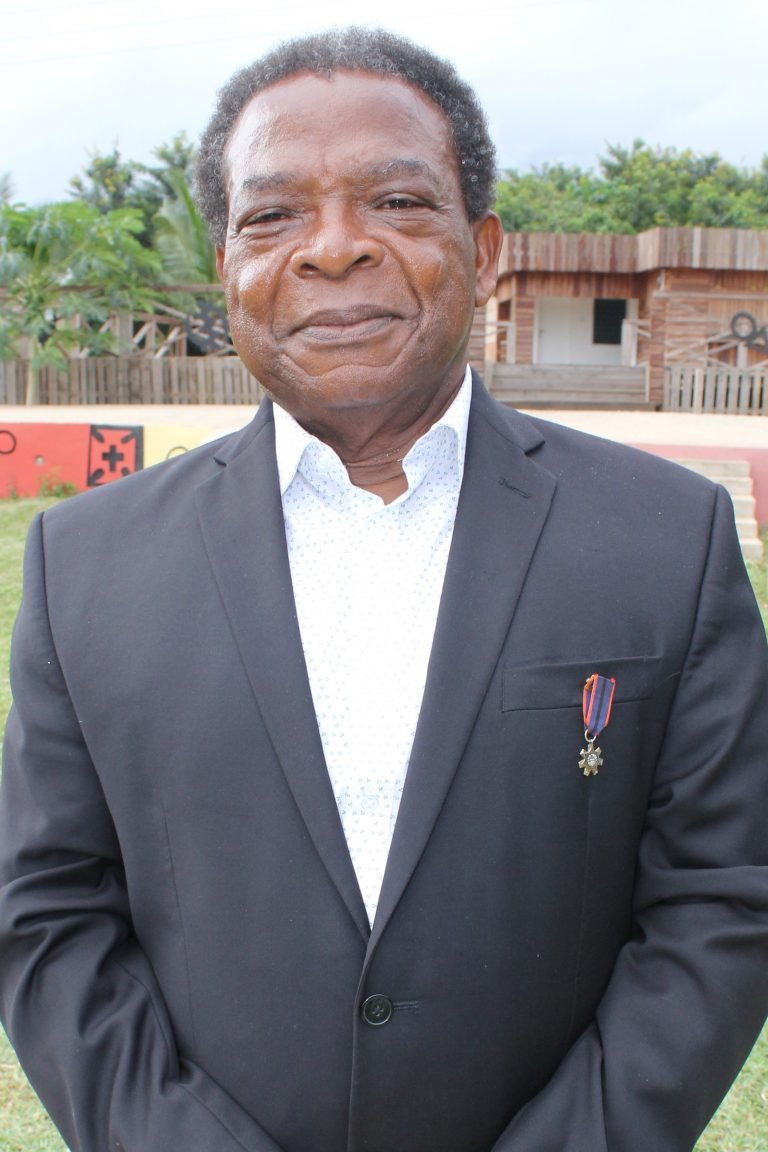
Former Chief of Staff of the republic of Ghana, Nana Ato Dadzie, has said until perpetrators of political violence are punished for their crimes, there will be no end to the phenomenon.
Speaking in an interview with Rev Dr Kwabena Opuni Frimpong on GTV’s ‘What is Next?’, the lawyer noted that there is the need to recognise the act as violence and not justify it as that doesn’t help.
“We should never encourage political violence. Violence must be treated plain; we shouldn’t have to treat political violence with kids gloves because it will come to swallow all of us including those who created it”
He added that the support of politicians gives perpetrators of political violence the impunity to keep up with the act.
“If any person, NDC, NPP, CPP commits a crime of any kind and you don’t look at it as political violence and that must not be touched and you put him through the law, others will stop,” he said.
Nana Ato Dadzie added that “it is being driven by people who want to achieve and sustain power. There will be no political hooligans around if they are not fueled by resources and what nots. Some party members also take it upon themselves to create this kind of groups with the purpose to gain more leverage within their own political parties.
He further mentioned that the inability to end political violence “is also a reflection on the fact that we are by that saying that we have weak or less than strong institutions.”
Source: www.ghanaweb.com
Voters card: Hired guarantors on the rise at registration centres – Opuni Frimpong reveals

There is a current rise of contract and or hired guarantors at several Electoral Commission registration centres across the country.
This was revealed by Chief Executive Officer of the Alliance For Christian Advocacy Africa, Rev. Kwabena Opuni-Frimpong.
According to him, this formed part of observations made by the group, comprising about 100 pastors from various denominations and accredited by the Electoral Commission (EC) to monitor the registration process in selected centres nationwide.
Speaking to GhanaWeb in an interview, Rev. Opuni-Frimpong noted that this crop of persons (hired guarantors), visit registration centres on a daily basis, serving the purpose of guaranteeing other registrants who may not have the required documents for the exercise.
Though he cannot ascertain the basis or details of such contracts, the Presbyterian Minister noted that the trend is gradually gaining grounds.
“Some of the registrants come with Ghana Cards and others with their passports. Those without the required documents come with guarantors. But it seems some registrants look for guarantors at the polling stations and that is producing guarantor contractors. There are people at the stations who, when people need them, they just go with them, I don’t know the details of the contract whether they pay them when they need them. We get the impression they are hired guarantors,” he stated.
He was however emphatic about the competent role being played by the Electoral Commission and its officials to ensure a smooth process. Describing as ‘satisfactory’, their performance, he said, “The Electoral Commission has performed remarkably, executing everything it stated in the public education as it were.”
Rev. Opuni-Frimpong, who is also a member of the EC’s Eminent Advisory Committee expressed concern about the growing rate of violence being perpetrated by political actors in the registration exercise.
He called for a public prosecution of such individuals, whilst charging the law enforcement agencies to identify and thoroughly investigate such cases without fear and favour.
The Alliance For Christian Advocacy Africa has been accredited by the Electoral Commission to monitor the ongoing voters registration in 6 regions. These include; Greater Accra, Eastern, Volta, Bono, Ashanti and Northern regions. With 100 pastors from different denominations, some 520 polling stations have been monitored as at July 19, 2020 in 75 constituencies.