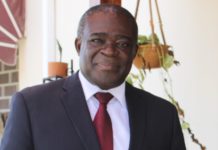


Richard Quayson, a deputy commissioner at the Commission for Human Rights and Administrative Justice (CHRAJ), has underscored the need for public servants to discharge their duties with the right conduct and attitude.
The two attributes, he believes, are key in servitude for public servants to abide by while discharging their duties for the public good.
Making his submission on GTV’s, ‘What is Next?’, with host Rev. Kwabena Opuni Frimpong, Richard Quayson said public servants must rid their minds of their personal benefits and rather focus on that of national development.
“Even though you may have the systems in place and the conduct of the staff is poor, it will undermine the public service being rendered and if the staff do not have the right attitude and mindset, it will be difficult. Yes, some work has been done to get the right conduct in place but enough still has to be done,” Mr Quayson said.
He urged for a collaborative effort to curbing the country’s unending corruption phenomenon with citizens being at the fore of the fight against corrupt practices.
Conduct, attitude key to discharging good public service – Richard Quayson
GES urged to develop guidelines for religious practice in schools

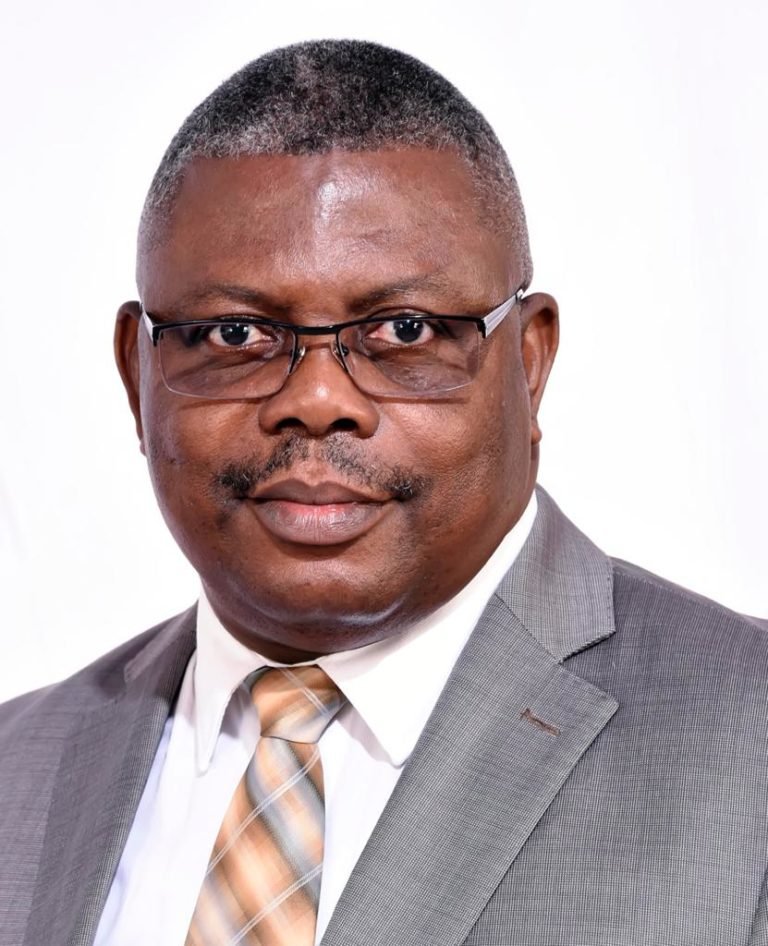
The Ghana Education Service (GES) has been urged to consider a comprehensive guideline to guide religious practices in Senior High Schools (SHS).
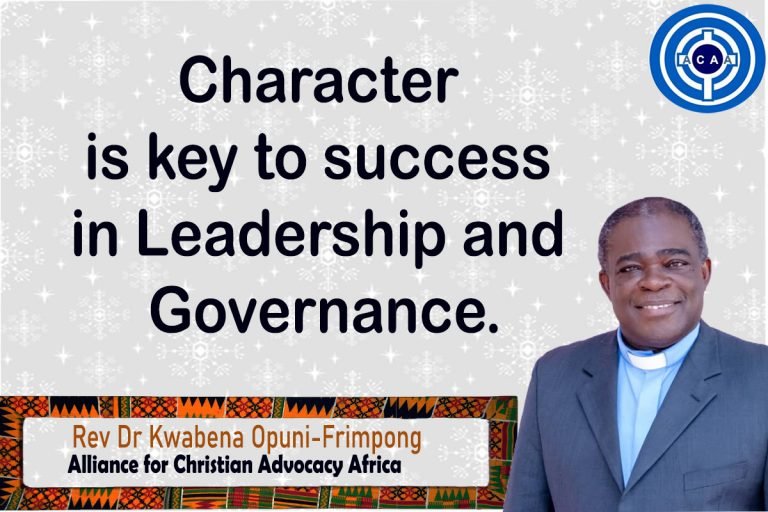
Rev Dr Kwabena Opuni-Frimpong, CEO of Alliance for Christian Advocacy Africa (ACAA), who made the call, said “The piecemeal solutions to matters of faith will end up demotivating governing boards, school managements, PTAs and religious bodies involved in education.”
He was speaking with the GNA in respect of the recent Rastafarians and Achimota School brouhaha and the Wesley Girls High School refusal to allow a Muslim student to fast during this year’s Ramadan, citing health reasons.
Rev Opuni-Frimpong was of the view that a comprehensive guideline that should be the point of reference in all faith and religious matters at all SHSs would forestall future brawl in schools.
The Minister of the Presbyterian Church of Ghana said the role of all stakeholders, including religious bodies, was critical and, therefore, all efforts must be made to ensure a healthy partnership.
Schools are run under the guidance of a board of governors, which advise schools administrations to ensure clarity of vision, ethos and strategic directions.
GNA
Jean Mensah tables four Electoral Reforms
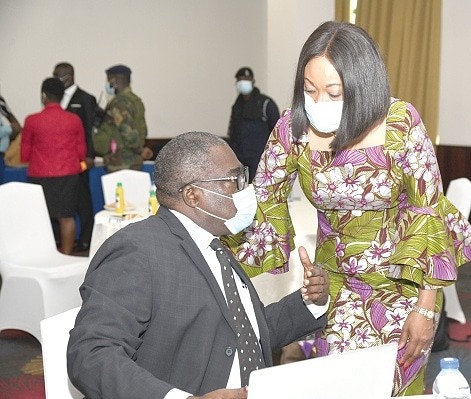
The Chairperson of the Electoral Commission of Ghana, Jean Mensa, has put forward four proposals as reforms for the conduct of elections in Ghana.
While she describes the 2020 Presidential and Parliamentary Elections as a success, she believes the country can do better drawing from the experiences of previous elections.
Speaking at a forum for the assessment of the 2020 Elections on Tuesday, she has thus put forward the following proposals for consideration:
*We propose closing the polls at 3pm rather than 5pm. In 2019, we announced our decision to close the polls at 3pm rather than 5pm, in the 2020 Elections. Nonetheless, owing to the COVID-19 pandemic and the stringent, and necessarily time-consuming safety protocols we instituted at our polling stations, we were compelled to put this proposal on hold. Over the past months, however, this proposal has re-surfaced from various sections of the public, and indeed, our own experience from the 2020 Elections has revealed that it is a workable proposal, as by 1pm, most polling stations were empty, suggesting that this is a workable proposal. Therefore, this is a reform we intend to put forward.
*Again, we propose to do away with the system of periodic nationwide registration exercises, and institute an all-round system where citizens who turn 18, or persons who have not previously registered, may visit any district office with their Ghana Card or passport and register as voters. This will help us do away with nationwide registration exercises and go a long way to reducing cost of elections.
*We further propose a year-round exhibition system that will enable citizens check their registration details on their smart phones and other mobile devices. Citizens would not need to wait for an exhibition exercise to check their details. They will be able to do so, all year round.
*We propose to build further efficiency into our collation process by focusing on data entry only at the Constituency Collation Centre. The entry point for data capturing into the system will be at the Constituency Collation Centre. The data i.e. Constituency Collation Results will be made available to all stakeholders at the Regional and National levels.
Flowing from the data captured at the Constituency Collation Centre, the system will generate regional and national reports without further data entry at any of those levels. By adopting this system, the problem of minor inaccuracies with the collation process and unnecessary delays will be reduced significantly.
She hopes that the proposals will be considered to address some of the challenges encountered.
Greed, dishonesty and hypocrisy must be eschewed in ‘galamsey’ fight – Asantehene
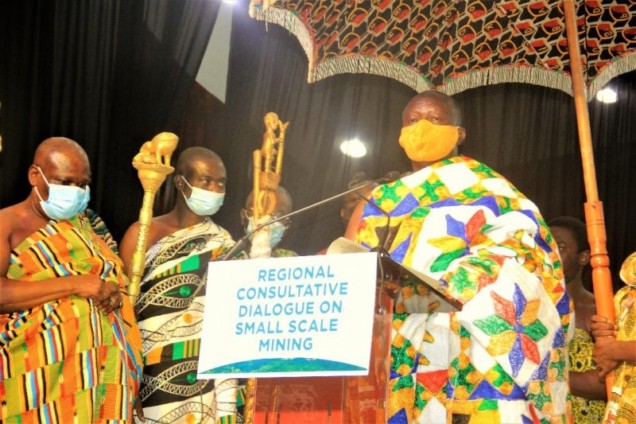
Asantehene, Otumfuo Osei Tutu II, has admonished stakeholders in the fight against illegal small-scale mining also known as galamsey to focus on the job at hand devoid of greed, dishonesty and hypocrisy.
Otumfuo Osei Tutu, who was addressing the maiden Regional Consultative Dialogue on Small-Scale Mining in Kumasi, called for unity and tenacity of purpose as the Government sought to advance legitimate and responsible small-scale mining.
The mining sector, he said, had so many prospects for the nation, citing its invaluable contribution to economic growth, especially in the area of wealth creation and poverty alleviation.
Therefore, the relevant regulations guiding the sector must be respected, he advised.
Otumfuo Osei Tutu said that was necessary in order not to compromise on the sustenance of the biodiversity and ecosystem.
He bemoaned the wanton destruction of farmlands, water bodies and forests in the course of illegal small-scale mining, stressing that the Metropolitan, Municipal and District Assemblies (MMDAs) were expected to tackle the menace head-on.
Mining close to water bodies with harmful chemicals and other unhealthy practices that caused damage to the environment must be critically looked at, the Asantehene said.
He said the noble idea behind the national crusade to sanitize the small-scale mining sector would not be realized if offenders were not dealt with in accordance with the law.
“Wrong is wrong and right is right irrespective of the personalities involved,” he cautioned.
Otumfuo Osei Tutu pointed out that the sophisticated nature in which illegal small-scale mining had assumed called for drastic measures in addressing it.
He called for all hands on deck to help repair the damage caused the nation’s water bodies and environment.
Mr Samuel Abu Jinapor, the Minister of Lands and Natural Resources, explained that the Regional Consultative Dialogue aimed to decentralise discussion on the way forward for the small-scale mining sector.
The objective was to provide input into the national discourse on the regularisation of the sector through coordination of diverse views.
It was also to develop appropriate policy options with the overarching goal of improving the operation, regulation, management and good governance of the sector.
“Sustainable Small-Scale Mining for National Development”, was the theme for the Dialogue, which brought together participants from the Ashanti, Bono-East, Bono and Ahafo regions.
They included MMDCEs, traditional authorities, Chief Executives of the Minerals, Lands, and Forestry commissions, representatives of political parties, civil society organisations, and organised small-scale mining companies and associations.
The 2017 Country Environmental Analysis by the World Bank said environmental degradation costed the nation about US$6.3 billion or nearly 11 per cent of the Gross Domestic Product (GDP).
The report, which was part of the Bretton Wood’s Institution diagnostic study on the economy, revealed that non-renewable resources such as gold and oil could not sustain growth as resources depleted, while renewable resources like cocoa, timber and other tree and food crops depended on good environmental stewardship.
Election 2020 fully funded by government; first in 4th Republic – EC Chair
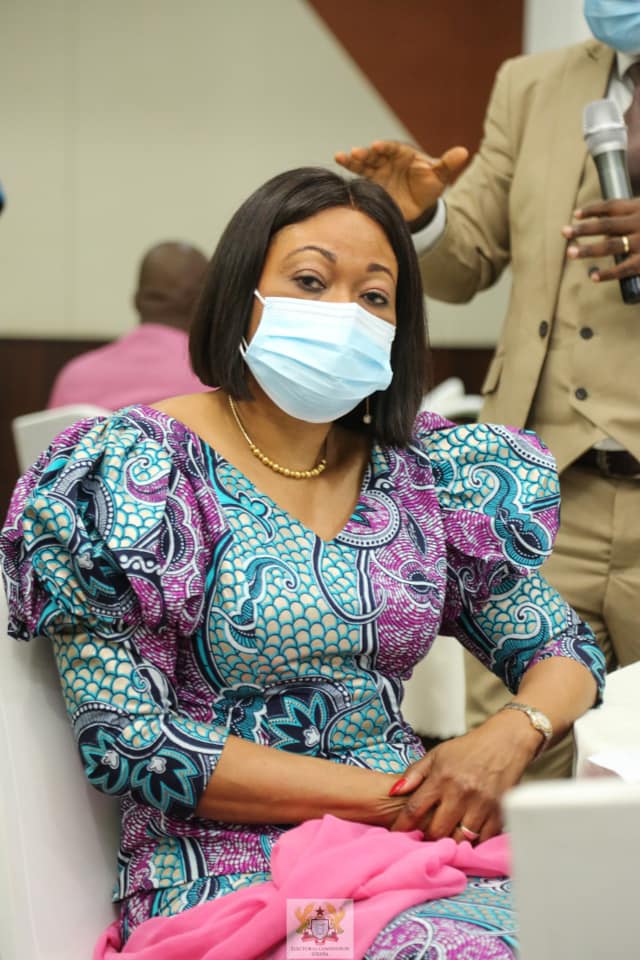
Election 2020 is the first election to be fully funded by the government since democracy was restored in the country in 1992.
It is one election which had no donor funding to support the election management processes, the Chair of the Electoral Commission (EC), Mrs Jean Mensa, has disclosed.
Disclosing this at the opening ceremony of the Inter-Party Advisory Committee (IPAC) workshop on the 2020 election in Accra yesterday, she urged Ghanaians to recognise and celebrate the achievements of the 2020 electoral process.
Mrs Mensa said beyond that feat, which needed to be celebrated, the processes leading to the 2020 election also involved a number of best practices that must be documented to serve as a guide for future elections.
“It is important that we recognise the feats we achieved through the 2020 electoral processes for the purpose of documenting best practices and experience and ensuring that the successful strategies we adopted do not fall through the cracks of inordinate fault-finding and critique,” she said.
Achievements
Some of the achievements include the successful use of biometric technology to ensure that only unique individuals were registered to vote; doing away with the phenomenon of double registration and multiple voting; the deployment of technology to enable a section of Ghanaians to check their registration details over the mobile phone and check their registration details all through to election day and reducing the cost of the election by 41 per cent, compared to the 2016 election (reduced the cost of the election from $13 per person to $7.7 and thereby saving the country $90 million).
Agenda
The two-day workshop, which ends today, has brought together actors and stakeholders in the country’s political space, including civil society organisations (CSOs), to take stock of the processes, strategies and approaches that were adopted for the 2020 election.
It will also discuss areas that need to be strengthened and build consensus on a reform agenda for the EC for future elections.
Some notable personalities who were present at the workshop were the General Secretary of the New Patriotic Party (NPP), Mr John Boadu, and the National Campaign Manager for the NPP in the 2020 elections, Mr Peter Mac Manu.
There were also a former running mate to an independent presidential candidate, Mr Jacob Osei Yeboah, and the Founder of the Ghana Freedom Party (GFP), Madam Akua Donkor.
Missing from the workshop were representatives of the National Democratic Congress (NDC).
The workshop is being held four months after the December 2020 elections.
Review process
Mrs Mensa said over the period, the EC had reviewed the processes that preceded, characterised and followed the general elections to ascertain the resilience of its electoral processes and its performance in managing the processes.
She told the gathering that in assessing the elections and their processes, it was important to consider that although constructive critique was a vital part of any institutional-building and learning process, the acknowledgement and celebration of the success of the 2020 elections could propel improvement in the country’s electoral processes.
“As state institutions, we tend to gloss over our achievements; as a country, our default mode is to cast assessments of public initiatives or exercises in the mould of fault-finding missions armed with a fine tooth comb, seeking earnestly to find fault.
“Sadly, we are slow to recognise where we have put good processes and systems in place, much less document them. In a bid to improve upon our past performance, we rush to propose new recommendations when the old processes and structures are working very well,” she said.
She added that the elections, organised amidst the unprecedented circumstances of a global pandemic, were a great achievement.
“We pause to celebrate the successes we achieved as a nation in carrying out elections under such circumstances, with a decorum and a level of efficiency that earned us the admiration of our neighbours across the sub-region and the international community as a whole,” she said.
Challenges
Mrs Mensa observed that it was important for the stakeholders to collectively examine the challenges that came up during the elections to help identify what strategies did not work and why.
“This is important to gain an insight into and understanding of why certain targets were not achieved,” she said.
She observed that one of the challenges that had been on the front burner of discussions was the perpetuation of the illegality of encouraging minors and foreigners to register as voters.
“Very often, fingers are pointed in our direction as if to say that the commission registered the minors and foreigners, but we need to take the time to identify the root cause of this phenomenon. We must ask ourselves: “Na who cause am?” It is certainly not the EC and its officials who cart illegal persons to the registration centres,” she said.
Proposals
Forging ahead, Mrs Mensa said, the EC had proposed the closing of polls at 3 p.m., instead of 5 p.m.
She also proposed the abolition of the practice of periodic nationwide registration exercises and rather institute an all-round system where citizens who turned 18 or persons who had not previously registered might visit any EC district office with a Ghana card or passport to get registered as voters.
Again, she proposed a year-round exhibition system that would enable citizens to check their registration details on their smartphones and other mobile devices.
Mrs Mensa further said the EC would build efficiency into the collation process by focusing on data entry only at the Constituency Collation Centre.
“The entry point for data capturing into the system will be at the Constituency Collation Centre,” she said.
Progress
A lecturer at the Kwame Nkrumah University of Science and Technology (KNUST), Rev. Dr Kwabena Opuni-Frimpong, told the Daily Graphic in an interview on the sidelines of the forum that it was important for citizens to acknowledge the success of the 2020 elections, especially because they were wholly funded by the government without any external support.
“Moving forward, we need to encourage ourselves and celebrate such milestones and our successes. We should not see only the negative, painful and dark sides; let us also see the bright side. It doesn’t mean all was well; it means that we can correct the wrongs,” he said.
Stakeholders back EC’s reform proposals
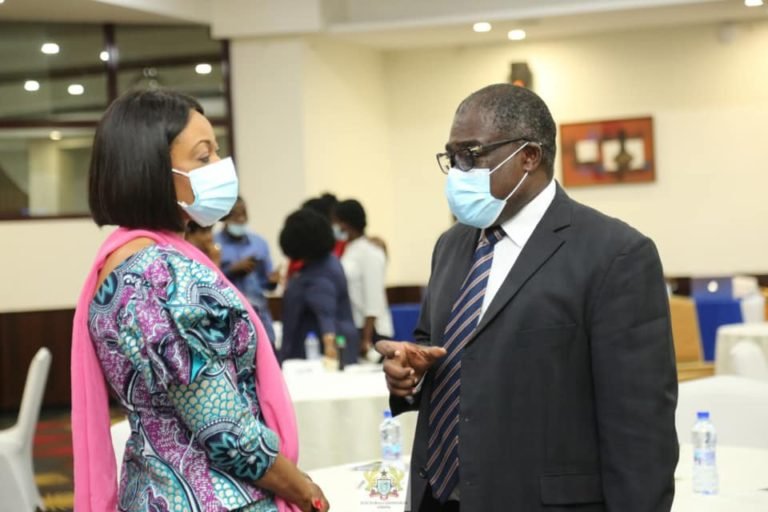
Some stakeholders in the country’s political space have backed proposed reforms in the country’ electoral process by the Electoral Commission (EC).
Speaking in separate interviews with the Daily Graphic at the Inter- Party Advisory Committee (IPAC) workshop on the 2020 elections in Accra last Tuesday, they said the proposed reforms would help improve the efficiency of the EC in delivering its mandate.
The two-day workshop, which started on Tuesday and ended yesterday, brought together actors and stakeholders in the country’s political space, including Civil Society Organisations (CSOs), to take stock of the processes, strategies and approaches that were adopted for the 2020 elections.
The workshop, held four months after the December 2020 elections, was also to help highlight the areas that needed to be strengthened and build consensus on a reform agenda for the EC for the future.
Proposals
At the opening of the workshop last Tuesday, the Chairperson of the EC, Mrs Jean Mensa, indicated that the EC was proposing, among other things, that the closing of polls during national elections should be brought to 3p.m. from the existing 5p.m.
She said the EC also proposed abolishing the periodic nationwide registration exercises, and institute an all-round system where citizens who turned 18, or persons who had not previously registered, might visit any district office with a Ghana Card or passport to get registered as voters.
The EC has also proposed a year-round exhibition system that will enable citizens to check their registration details on their smartphones and other mobile devices.
Mrs Mensa further said the EC would build efficiency into the collation process by focusing on data entry only at the Constituency Collation Centre.
Reaction
Responding to the proposed reforms, the NPP National Campaign Manager for the 2020 elections, Mr Peter Mac Manu, told the Daily Graphic that the party was optimistic that the reforms would help to improve the conduct of elections in the country.
With regard to collation of results, he said it was not in the bosom of the EC alone to ensure the peaceful conduct of the process but all stakeholders, including voters.
” Voters and stakeholders all have the responsibility to ensure that peace reigns because if you look at what happened in Techiman South, it is not the best, people had massed behind the collation centre and were spewing all kinds of rumours that they are stealing and the radio stations picked it up and people in the community rushed there with stones and some firing at the security forces,” he noted.
He said he was happy that the EC was reviewing how collation was done, including infrastructure, the systems and the processes.
Ghana Freedom Party
The founder of the Ghana Freedom Party (GFP), Madam Akua Donkor, also told the Daily Graphic that the proposals were significant and should be accepted by all stakeholders.
She said although the EC deserved commendation for the peaceful conduct of the 2020 elections, it was in the interest of all citizens that it improved on its delivery.
Opuni-Frimpong
A lecturer at the Kwame Nkrumah University of Science and Technology (KNUST), Reverend Dr Kwabena Opuni-Frimpong, said it was important for citizens to acknowledge the success of the elections, especially when it was wholly funded by the government without any external support.
“Moving forward, we need to encourage ourselves and celebrate such milestones and our successes, we should not only see the negative side, the painful side, the dark side alone but let us also see the bright side because it doesn’t mean all was well but it means that we can correct the wrong,” he said.
Pray for the sick but allow medical professionals to do their work – Rev Prof Charles Ansah
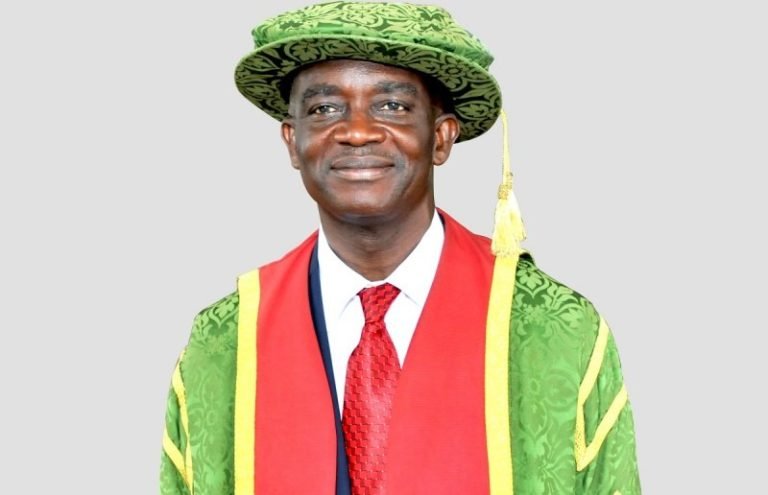
The Pro-Vice-Chancellor of the Kwame Nkrumah University of Science and Technology, Rev Prof Charles Ansah, has urged religious leaders to focus on praying for the sick and allow medical professionals to do their work with the appropriate scientific methods.
He noted that under no circumstances should a pastor or a Mallam prevent any patient from taking his medication in the name of divine healing.
Speaking to Rev Dr Kwabena Opuni Frimpong on GTV’s “What is Next?”, Rev Prof. Ansah noted that it is medically wrong and religious leaders had no business in deciding how a patient should be treated.
“…I am a man of God, I believe in spiritual healing and divine intervention but God created us in his own image and has given us the wisdom so that we learn science and help ourselves with that. The medical doctors are well trained, they able to diagnose, they are able to prescribe the appropriate medication for the patient so if he or she is in hospital, what business have you to say that, I will take you from the hospital? Allow them to do what they can.”
“Working of medications and success in treatments is just like prayer. When you are praying about something, sometimes you instantly get an answer, sometimes it delays, sometimes it doesn’t come at all, in the same way, when you are given medication and it is not working immediately, it does not mean that it is not going to work and that is why doctors will ask you for review, from time to time, when you go and they think that they need to change the medication, they will change, healing will delay but it will surely come,” he added.
He further called on colleague pastors to desist from giving out anointing oil and holy waters to patients on admission at the hospital and allow doctors to employ scientific methods to cure them.
“It is criminal, you don’t have to do that, some of the concoctions sent to patients in the hospital, we don’t know what is in there, yet they smuggle them to the patient and even as the patient is taking the medication prescribed by the doctor, sometimes you find out that they are taking those medications as well, the doctors then comes and realize that what he recommended for the patient is not working and the patient will never tell the Doctor that, I am talking something else. Let us pray for them but let us also allow the doctors to treat our patients for us,” he noted.
Piecemeal solutions will not resolve challenges in the educational system – Rev. Opuni-Frimpong

Rev. Dr Kwabena Opuni-Frimpong, Executive Director of the Alliance for Christian Advocacy Africa
Executive Director of the Alliance for Christian Advocacy Africa, Rev. Dr Kwabena Opuni-Frimpong has added his voice to the ongoing saga of a Muslim student prevented from partaking in the Ramadan fasting.
In a circular issued, Rev. Opuni Frimpong called for further deliberations to resolve the current religious challenges plaguing the country’s educational system.
“Piecemeal solutions to the issues of hijab, fasting etc. will not adequately resolve the current religious challenges in our educational institutions.”
“We need to discuss the whole issues of the Religious Bodies partnership with the Government in education and its implications for a multi religious-affiliated people, bearing in mind the concept of unity that should find expression in respectable diversity,” Rev. Opuni-Frimpong said.
Honest debates will enhance the role of chiefs in national development – Nana Fredua Pambuo
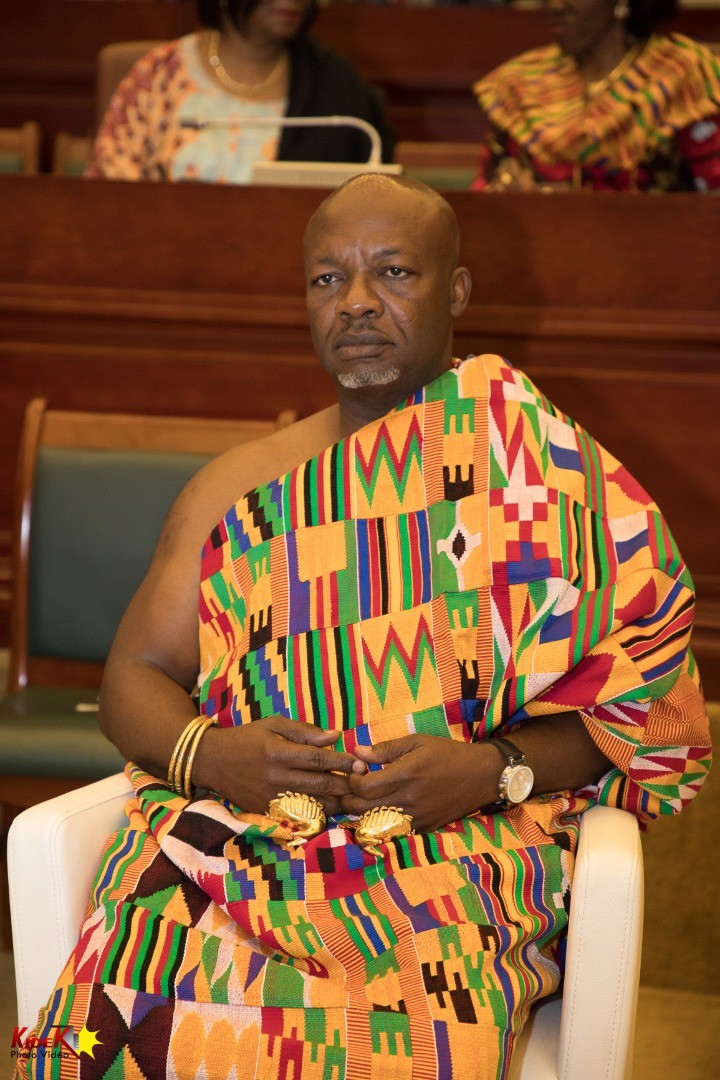
There is the need for an objective and honest debate to be had in order to enhance the role of chiefs and traditional rulers towards national development.
This is according to Nana Fredua Agyeman Pambuo, Pioneer Board Chairman of the Otumfuo Osei Tutu II Charity Foundation.
Making his submission on GTV’s, ‘What is Next?’, with host Rev. Kwabena Opuni Frimpong, Nana Agyeman Pambuo pointed that the role of chiefs and traditional rulers has over a period, been insignificant unless that individual is appointed by government.
“We all know every Ghanaian comes from a village that has an appointed authority or ruler of that community but in terms of the powers given to that authority, we really need to go back to our Constitution and have an objective and honest debate about the role chiefs play in national development.”
“…Because as it stands now chiefs and traditional rulers lack the gravitas, power, law or position within our Constitution to be part of our national development,” he explained.
Though chiefs and traditional rulers can serve as the doorway that opens up for national development, Nana Agyeman Pambuo believes the Chieftaincy Act which seeks to govern the role of chiefs ought to be critically prioritized and devoid of partisan politics.
People of faith must always set higher standards in society – Dr Opuni Frimpong

The Chief Executive Officer of the Alliance of Christian Advocacy Africa (ACAA) Rev Dr Kwabena Opuni Frimpong, has cautioned Christians to always set good examples by exhibit higher standards in society.
His warning follows the outrage on social media on the back of an event dubbed “Pneumatica Night 2021” organised by the Christ Embassy Youth Church on Friday, April 30, 2021.
“In fact, those of us holding the Bible, people of faith must even set a higher standard for ourselves and others.”
The event which was held at the Fantasy Dome, Trade Fair Centre, for many who captured photos and videos, failed to observe the Covid-19 preventive protocols.
Speaking on JoyNews, Dr Kwabena Opuni Frimpong rebuked the creation of an impression by Ghanaians to the international community that the country is not sensitive to the woes of Covid-19.
He said that although politicians, during the 2020 December elections were captured in similar scenes, such activities are not to be encouraged.
“So this is the time that even people of faith, we must go the extra mile that yes God is there but we want to keep the nation together.”
Meanwhile, the Police in a press statement Sunday, revealed that the organisers did not give the service any notice to “oversee an event of this magnitude”.
It also noted that the deed does not only put the whole country at risk of a third surge in coronavirus cases but also breaches the Imposition of Restriction Act, warning culprits will be persecuted.
Some Ghanaians have, however, described the involvement of the police as harassment but the ACAA Boss disagrees as he maintains the laws of the country must be allowed to work.
“So persecution is not here at the moment. We are talking about responsible behaviours, we are talking about law-abiding citizens and if you go outside the red lines and you are being punished, and now you don’t know what the investigation will come out with, this u don’t call persecution.”
For other social media users, once people received healing, there is no cause for alarm but again, the Rev Opuni Frimpong begs to differ.
“Yes, miracles happen in our churches but there are still sick people at the Korle-Bu, Komfo Anokye, Tamale hospitals so you can’t say that you prayed for sick people and they’ve been healed so you don’t care,” he said.
“What about those who don’t have the faith you have and what about those who have not received the miracles that your church members are receiving,” he quizzed.
According to the reverend minister, “if somebody is just frustrating me to believe in my God or to serve my God, yes, but when you put people together outside the protocols” such should not be seen as harassment.
“In fact, in the Bible, you hear Paul sometimes admonishing that even if you are a person of faith, you have strong faith, for the sake of the weaker brethren, you can decide even to do certain things or not to do certain things,” he referred.
Refrain from the excessive abuse of medications – Prof. Ansah tells Ghanaians
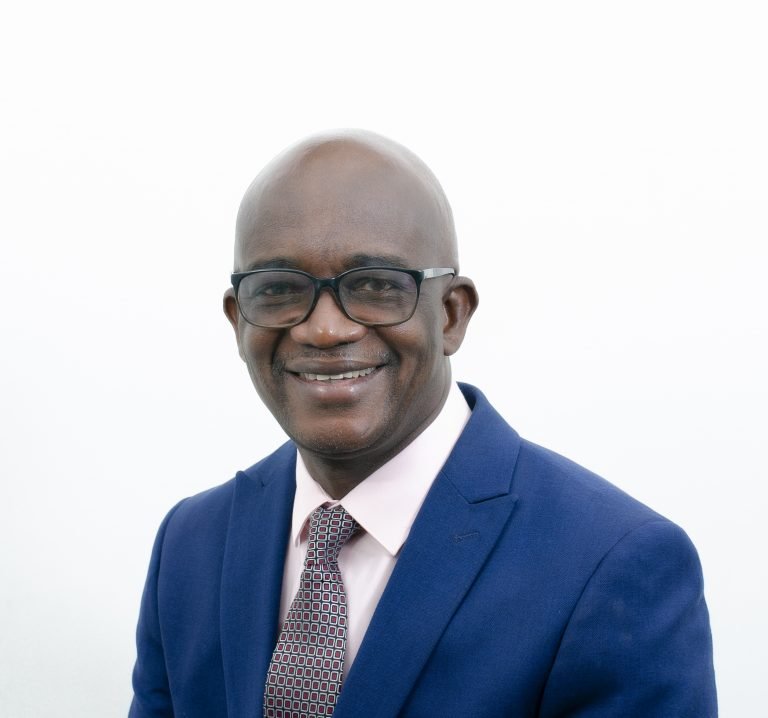
Former pro Vice-Chancellor of the Kwame Nkrumah University of Science and Technology, Rev. Prof. Charles Ansah has charged citizens to refrain from the misuse and abuse of medications.
Most recently, reports on the excessive use and abuse of pain reliever, Tramadol among some youth in the country became an issue of national concern.
But Prof Ansah who is also a certified Pharmacist believes Ghana has over the years not fully conducted an extensive research on the use and misuse of medications by persons who seek after them.
Making his submission on GTV’s ‘What is Next?’ with host Rev. Kwabena Opuni Frimpong, the former KNUST pro-Vice chancellor pointed that aside the abuse and misuse of pain killers, the same for anti-biotics is of major worry too.
“When it comes the misuse of drugs and hard drugs it has become a major problem and people are really abusing the use of pain killers and now when it comes to anti-biotics, most of them a gradually losing their potency as a result of the excessive abuse”
“For example, Aphrodisiacs to enhance sexual performance are largely being abused and that is a cause of worry,” he noted.
Prof. Ansah therefore called on authorities to conduct studies in order to ascertain the level of drug abuse and misuse occurring in the country. This he says will give the country a clearer picture of the problem and implement solutions.
Faites des sacrifices axés sur le développement national et personnel – Le professeur Gyedu charge les citoyens – GhanaWeb
Actualités générales du dimanche 18 avril 2021
La source: www.ghanaweb.com
18/04/2021
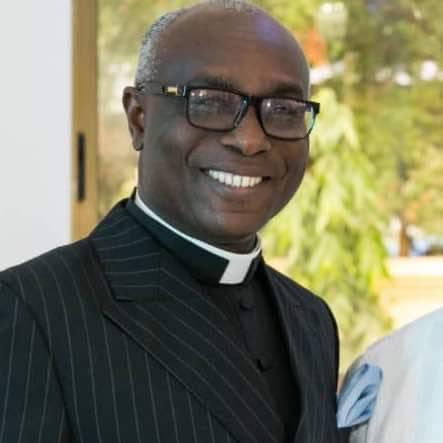
lire la vidéoTour. Dr Kwabena Opuni-Frimpong (L) et Prof. Kwabena Asamoah Gyedu (R)
Le chef du Séminaire théologique de la Trinité, le professeur Kwabena Asamoah Gyedu, a chargé les citoyens et les chrétiens de démontrer leur engagement envers un bon service en faisant des sacrifices axés sur le développement national et personnel.
Selon lui, les citoyens et les institutions doivent placer leur volonté de sacrifice et d’aide aux autres avant leurs propres considérations commerciales ou personnelles.
Dans une interview avec le révérend Kwabena Opuni Frimpong, animateur de l’émission «What is Next?
«Disons que vous êtes médecin ou infirmier dans un établissement de santé, puis juste à l’entrée de l’hôpital lorsque vous rentrez chez vous, une victime d’un accident arrive et vous savez que, d’après votre expérience, vous pouvez sauver cette personne. Vous devez prendre une décision consciente et empathique pour aider cette personne », a déclaré le professeur Gyedu.
«Dans ce genre de circonstances et de situations, vous devez faire un effort supplémentaire et c’est ce que Jésus-Christ a fait pour nous. Les sacrifices entrent dans l’équation en fonction de la situation en jeu », a-t-il souligné.
Regardez la vidéo complète de l’interview ci-dessous
Make sacrifices geared towards national and personal development – Prof. Gyedu charges citizens
Head of the Trinity Theological Seminary, Prof Kwabena Asamoah Gyedu, has charged citizens and Christians to demonstrate their commitment to good service by making sacrifices geared towards national and personal development.
According to him, citizens and institutions must place their will to sacrifice and help for others ahead of their own commercial or personal considerations.
Making his submission in an interview with Rev. Kwabena Opuni Frimpong, host of Ghana Television’s ‘What is Next?, Prof. Asamoah Gyedu advised that citizens tap into their empathetic spirit to assist all who may be in need.
“Let’s say you are doctor or nurse of a health facility and then right at the entrance of the hospital when you’re going home an accident victim comes and you know that from your experience you can save that person. You need to make a conscious and empathetic decision to assist that person,” Prof Gyedu said.
“In those kinds of circumstances and situations, you have to go the extra mile and that is what Jesus Christ did for us. Sacrifices come into the equation depending on the situation at play,” he pointed.