

The newly-sworn in Inspector General of Police, COP Dr George Akuffo Dampare, has assured President Nana Addo Dankwa Akufo-Addo and the entire nation that he will work hand-in-hand with his colleagues in the service to ensure that the Police administration improves beyond what he inherited.
Speaking after his investiture at the Jubilee House in Accra on Friday, October 8, he said “Working with my colleagues in the Police service and outside it, and also getting the support and the backing of the population of the country we will be able to leave the Police service better than we came to meet it.
“So that at the end of the day if we leave the service and we are passing by and we see Police people doing an excellent job we will be proud and tell ourselves that yes we also contributed and as a result of that we are seeing a different Police service.”
President Akufo-Addo for his part assured that his government will support him to deliver on his mandate of providing security to the people of Ghana.
Mr Akufo-Addo asked him not to form an alliance with political parties especially the governing party.
“It is in everybody’s interest that the Police Service conducts itself as a principled, creditable instrument of accomplishing the executive’s duty to maintaining law and order in the state. Governments in our body politics have term limits, in a multiparty democracy parties win and lose power. It is good for the health of the nation that this should be so.
“This is why the Police Service under your leadership should not tie its wellbeing or otherwise to the fortunes of the ruling party of the day.
“As president, and together with you as Inspector General of Police, we need to cooperate to ensure that the Police service is left to focus on its core mandate and not be an appendage of the ruling party.”
I’ll ensure Police service is better than what I inherited – Dampare
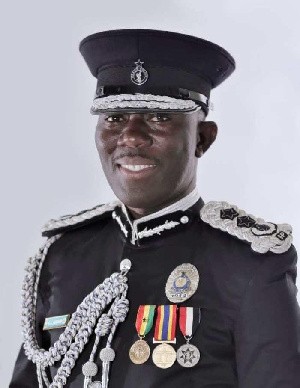
Dr George Dampare sworn in as 23rd IGP of Ghana Police Service
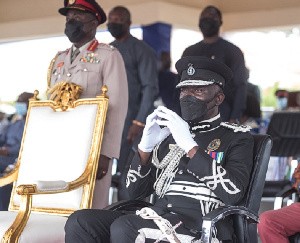
• George Akuffo Dampare is the 23rd IGP
• He has been sworn in by President Nana Addo Dankwa Akufo-Addo
• Dr Akuffo Dampare had been acting as IGP since August this year
COP Dr George Akuffo Dampare has been sworn in as the 23rd Inspector General of the Ghana Police Service.
Dr Dampare was sworn into office by President Nana Addo Dankwa Akufo-Addo on Friday, October 8, 2021, at the Jubilee House.
Speaking at the IGP’s investiture, the President said Dr Dampare who had been in acting capacity since August 1, 2021, has demonstrated over the period that “he will be an effective leader of the Police.
“We have a worthy successor to Mr Oppong-Buanoh (the immediate past IGP) and the others who have gone before him,” Mr Akufo-Addo added.
In assuring the new IGP of his support, the president said government will do its best to assist him in the discharge of his duties.
On his part, the new IGP said he will rally the Police Service and all stakeholders to improve beyond its status before his appointment.
“Working with my colleagues in the Police service and outside it, and also getting the support and the backing of the population of the country we will be able to leave the Police service better than we came to meet it.
“So that at the end of the day if we leave the service and we are passing by and we see Police people doing excellent job we will be proud and tell ourselves that yes we also contributed and as a result of that we are seeing a different Police service,” he said.
Profile of COP Dr George Akuffo Dampare
Dr. George Akuffo Dampare is the youngest Acting Inspector–General of Police (IGP) to be appointed in the Fourth Republic and the eighth youngest since Ghana gained independence. Prior to this appointment, he was the most senior police officer after the just retired IGP.
Dr. Dampare joined the Ghana Police Service (GPS) as a Constable in December 1990 at age 20 and rose through the ranks to become Commissioner of Police (COP) 24 years later at age 44 in 2014, the rank he held until his appointment.
In 1991, on completion of his recruit training, Dr. Dampare was adjudged the overall Best Recruit at the National Police Training School and won all awards except the award for the ‘Best Marksman’. Again in 1996, he emerged as the overall Best Cadet for the 32nd Cadet Officers’ Course at the Ghana Police Academy (formerly, Police College) and won all awards, including Excellence in Professional Police Subjects and Excellence in Academic Subjects.
During his over a thirty-year career as a police officer, Dr. Dampare has made significant contributions to policing in Ghana and beyond as enumerated below:
At the leadership and management level, Dampare has had the rare privilege of serving as the Head (Director-General) of almost every major department, giving him greater insight into the administration of policing in Ghana. Specifically, Dr. Dampare has been Director-General for Administration and Director-General for Welfare twice.
He has also served as Director-General for MTTD, Director-General for Research & Planning, Director-General for Operations, Director-General for ICT, Director-General for Finance, and Director-General for National Patrol Department (Police Visibility Department).
Other leadership positions Dr. Dampare previously held include Commandant of the Police Command and Staff College, Accra Regional Police Commander, Regional Commander for Railways, Ports and Harbour (now Police Marine Department), Municipal Commander for Cape-Coast, and Chief Internal Auditor of the GPS.
Between 2010 and 2015, under the leadership of two IGPs, Messrs. Paul Tawiah Quaye and Mohammed Ahmed Alhassan, Dampare led and coordinated the ‘National Anti-armed Robbery Reward to Informant Initiative’, which saw the arrest and prosecution of many notorious armed robbers across the country.
As the Director-General for National Operations, Dr. Dampare created an efficient system where fragmented units were consolidated to create effective and complete departments such as the establishment of an Anti-armed Robbery Unit (the COMBAT Unit) to aggressively fight robbery and other violent crimes.
He also created the Intelligence Unit within the National Operations Department, which later informed the creation of a Police Intelligence Department at the national level.
As Accra Regional Police Commander, Dampare introduced an innovative and proactive policing strategy called the “Continuous Stakeholder Engagement Programme” where all stakeholders were included and involved in policing the Region. For the first time, through this initiative, the Ghana Police Service under his leadership, visited Political Parties in their offices to engage them.
As Director-General in charge of Welfare, Dr. Dampare introduced an innovative social welfare scheme where he led officers from the Department to visit the homes of scores of sick and bedridden police officers across the country, and also introduced strategic medical interventions to facilitate their wellness.
Still, at Welfare, Dampare initiated a process at Dodowa and Kasoa to reclaim lands owned and paid for by police officers. The matter had become a national security threat as many officers were angry at the failure of the leadership of the police administration to intervene in the situation which had lasted for close to a decade.
In 2013, under the leadership of the then Inspector-General of Police (IGP), Mr. Mohammed Ahmed Alhassan, Dr. Dampare led a team of officers, working day and night, to restructure the Armoured Car Squadron (ACS) Unit into the Formed Police Unit (FPU) within a record time of ten (10) weeks. This task had remained impossible for over fifteen years.
The FPU has now become one of the police units undertaking internal police operations and international peacekeeping missions under the United Nations and African Union.
As the Director-General of the National Patrol Department (Police Visibility Department) and under the leadership of the then IGP, Mohammed Ahmed Alhassan, Dampare supervised the implementation of the novel “Police Visibility” program which saw the presence of police personnel at most intersections and communities in Ghana.
Again, during the implementation of the vision of the then IGP, Mohammed Ahmed Alhassan, for the creation of the Police Service Command and Staff College at Winneba and the Police Service Public Safety Training School at Pwalugu, Dr. Dampare was the leader of the technical teams that ensured the full operationalization of these two specialist training institutions.
George Dampare is credited with the idea that led to the establishment of the office of the Armourer-General which serves as the central point for accounting for arms and ammunition within the Ghana Police Service as well as the establishment of the Service Enquiry Monitoring Unit (SEMU) with the responsibility of managing the GPS disciplinary system.
As Coordinator of the National Inter-Ministerial Task Force for the 2007 Ghana Floods which was under the overall leadership of Dr. Mrs. Mary Chinnery-Hesse (then Chief Advisor to H.E. President J.A. Kufuor), Dr. Dampare led a team, within a seven-month period, to develop and implement a National Disaster Management Model, which brought all United Nations Agencies, Red Cross, and Civil Society organizations, among others, together, to successfully manage the disaster.
As Director-General for Finance, Dampare led a Police Technical Implementation Team to work with the Fair Wages and Salaries Commission, to migrate the Police Service onto the Single Spine Salary Structure as the first institution in the country to successfully complete the migration.
Still, as Director-General for Finance, Dampare also introduced the payment of recruits’ allowances through the bank by getting the bank accounts as well as ATM cards. He also engaged the banks and got them to build ATMs at the Police Training Schools at no cost to the Government.
Under the visionary instructions of the then IGP, Mr. Paul Tawiah Quaye, Dampare also led a team to establish the Procurement Unit of the GPS and ensure full implementation of the Procurement Act. He introduced cost-saving measures in the repair of Service vehicles and the use of hotel accommodation, among others.
George Dampare led a team of officers to use mostly donations from the private sector to give a facelift to the Police Headquarters by constructing a Public Affairs building, the Integrity Square, the Police Fitness and Social Centre, and a Helipad. The CID Headquarters building was also refurbished under his leadership.
As Accra Regional Commander, Dampare raised sufficient capital from the private sector to complete a new office complex and re-roofed 90% of all office buildings at the Regional Headquarters which had been in a deplorable state for years.
During his policing career, Dr. Dampare has undertaken numerous law enforcement courses at tactical, operational, strategic leadership and management levels, making him an all-around police officer with the required skills and competencies commensurate with his rank.
Aside from his policing, Dr. Dampare previously worked as a Research Fellow and lecturer at King’s College London, University of London. He also lectured at the University of Cape-Coast (UCC), Ghana Institute of Management and Public Administration (GIMPA), Regent University College, and the Data Link University College. He is also one of the pioneer lecturers at the Business School of the Kwame Nkrumah University of Science and Technology (KNUST), Kumasi.
Having passed the GCE Ordinary and Advanced level examinations as a private candidate in 1989 and 1992 respectively, Dr. Dampare proceeded to study accountancy and became a Chartered Accountant in 1996 at age 25. He also holds a Doctor of Philosophy (PhD) degree in Finance and Management from the King’s College, London, University of London, and has two Master of Science degrees with distinction in Accounting & Finance, from London South Bank University, UK and Business Systems Analysis & Design from City University of London, UK.
Dr. Dampare also has a certificate in High Impact leadership from the Institute for Sustainability Leadership, University of Cambridge, UK, and a certificate in Leadership and Management from the Aresty Institute of Executive Education, The Wharton School, University of Pennsylvania, USA.
Dr. Dampare is a member of a number of professional associations including the International Association of Chiefs of Police (ICP), International Association of Crime Analysts (IACA), the Institute of Chartered Accountants (ICA), and the Ghana Journalists Association (GJA).
Dr. Dampare has also served and continues to serve on several boards including the Economic and Organized Crime Office (EOCO) Governing Board, Data Link University College Council, Police Central Disciplinary Board, and the Pumpkins Foundation Board (a philanthropic organization for underprivileged children, including those with autism).
He is married to Anita and has six children.
Ignore pressure from pro-LGBTQI+ people – Opuni-Frimpong to Parliament

Former General Secretary of the Christian Council of Ghana, Rev Dr Kwabena Opuni-Frimpong, has appealed to Parliament not to succumb to pressures over the anti LGBTQI+ bill.
According to him, the House must be firm on its position and not in any way be intimidated or forced to withdraw the bill before it.
The ‘Proper Human Sexual and Ghanaian Family Values Bill’ 2021, also known as the Anti LGBTQI+ bill, seeks to criminalise the advocacy and practice of homosexuality in Ghana,
It prescribes that people of the same sex who engage in sexual activity could be fined or jailed for between three to five years.
The Bill is a private members’ legislation being sponsored by eight Members of Parliament (MP); seven from the National Democratic Congress and one from the New Patriotic Party.
However, some pro- LGBTQI+ groups said the bill preaches hate against gays and homosexuals and are already hinting of severe repercussions on Ghana should the bill be passed.
A group, made up of 15 professionals in various fields including law and academia, have since submitted a memo to Parliament to kick against its passage.
But speaking on Adom FM’s Dwaso Nsem, Rev Opuni said the legislators sponsoring the bill are fighting for the “national conscience of the country”, hence must be given the needed support.
“We live in a democratic society and people have dissenting views but we must look at the greater good of the people. The Speaker has condemned it so has the President and other statesmen so we shouldn’t take their comments for granted.
“This is not our value and culture. We cannot accept it because it will only destroy us. Countries have resisted and we can do it too because others are also looking up to Ghana,” he cautioned.
He further charged church leaders, Muslim leaders, traditional leaders, and others not to leave the fight for only the MPs, adding these LGBTQI+ people have powerful people behind them.
54,756 gays, bisexuals, others live in Ghana – Ghana AIDS Commission

Ghana relies largely on donor funding in the fight against HIV & AIDS
One of the groups to be negatively impacted by the proposed anti-LGBTQI law dubbed “The Promotion of Proper Human Sexual Rights and Ghanaian Family Values Bill, 2021″ is men who have sex with men in the country.
Experts say if the bill – in its current form which outlaws funding for such groups and provision of services to them – is passed into law, it will drive the practitioners underground which will result in the spread of human immunodeficiency virus (HIV) and acquired immunodeficiency syndrome (AIDS).
Ghana relies largely on donor funding in the fight against HIV & AIDS, and any law that bans donors from funding the activities of groups that provide health and life support to MSM will impact negatively on the fight against HIV.
For the experts, the bill (in its current form) will erode Ghana’s fight against HIV & AIDS since a significant number of people are engaged in the act.
Therefore, advocates are of the view that even if the bill is to be passed into law, portions that outlaw funding and service providers to MSM should be removed.
Studies from various countries where there are laws against gays, bisexuals and others show that HIV and AIDS among MSM are very high.
There are biological, behavioural, legal and social and cultural factors that put men who have sex with men 18.1% times more at risk of HIV compared with the general population.
One of the key reasons for high vulnerability to HIV among this group is that unprotected anal sex carries a higher risk of transmission than vaginal sex.
This is because the walls of the anus are thin and more easily torn, creating an entry point for HIV into the bloodstream.
The seriousness of the situation is found in a report sighted by The Finder titled “Ghana Men’s Study II (GMS II)” dated 2017, which looked at men who have sex with men (MSM) in Ghana.
According to the report authored by Ghana AIDS Commission (GAC), an estimated 54,756 men who have sex with men exist in Ghana as far back as 2017.
0.72% of adult male population aged 18 years and above.
This represents 0.72% of adult male population aged 18 years and above in Ghana using the population in 2017.
18.1% prevalence rate
The GMS ll found an aggregate HIV prevalence of 18.1% among MSM in Ghana, which represents a high prevalence rate compared to the national prevalence rate of 1.6%.
That, in real terms, represents about 9,911 men living with HIV in the MSM community.
93.4% are single or never married
According to the report, 93.4% of MSM in the study reported being single or never married, while HIV prevalence was 37.4% among MSM with four sexual partners in the past six months preceding the survey.
21.6% prevalence in MSM who had ever had sex with a female partner
It revealed that MSM who had ever had sex with a female partner had prevalence of 21.6%, while prevalence of HIV among MSM with one or no female sexual partners was 18.1%.
30.2% prevalence among receptive anal sex
For MSM with no or regular partner, HIV prevalence was 24.7% compared to MSM who engaged in receptive anal sex who had HIV prevalence of 30.2%
MSM with two or more receptive partners had HIV prevalence of 34.2%.
28.1% prevalence among transgender
HIV prevalence was 28.1% among MSM who identified as transgender.
91.5% MSM are 34 years and below
It turns out that a high number of 91.5% of all MSM are 34 years and below.
61.5% are between 18-24 years
The report revealed that about 61.5% of MSM populations in the study were aged between18 and 24.
30.6% between 25-34 years
Similarly, some 30.6% were aged between 25 and 34.
4.7% are 35 years and above
According to the report, MSM who are 35 years and above constitute about 4.7% of the MSM population.
HIV prevalence was 37.8% among older MSM 35 and above. This means one out of three persons in this category has HIV.
HIV prevalence differed in each of the study regions
Greater Accra (42.2%) HIV prevalence
An unusually high adjusted HIV prevalence estimate of 42.2% were found among MSM in the Greater Accra Region.
Ashanti Region (25.4%) HIV prevalence
In the Ashanti Region, 25.4% of MSM were found to be HIV positive.
Volta Region (14%) HIV prevalence
Volta Region recorded 14% MSM HIV prevalence.
Western Region (10%) HIV prevalence
While in the Western Region, 10% are living with HIV.
Central Region (10.1%) HIV prevalence
Central Regions recorded 10.1% HIV prevalence among MSMs.
Eastern Region (9%) HIV prevalence
In the Eastern Region, 9% of MSM were estimated to be HIV positive.
Brong-Ahafo Region (4%) HIV prevalence
The Brong-Ahafo Region has the lowest prevalence of 4% in the country.
Northern Ghana (4.3%) HIV prevalence
Among MSM in Northern Ghana, HIV prevalence was estimated to be at 4.3%.
38% HIV prevalence among persons with tertiary or higher educational attainment
Among MSM with tertiary or higher educational attainment, the prevalence was 38%.
40.5% prevalence among widowed/divorced/separated
For MSM who were widowed/divorced/separated, HIV prevalence was 40.5%.
25.3% prevalence among high-income earners
Among MSM with high income, HIV prevalence was about 25.3%.
A total of 22.4% of MSM in the low income, and 18.9% of those in the no income bracket tested positive for HIV.
40.34% are gays
About 40.34% of MSM captured in the report identified as gay with 23.6% of them infected with HIV.
42.6% bisexual
Among those who were captured in the study, 42.6% of MSM in the study identified as bisexual, with 19.4% being HIV positive.
9.7% are straight, 1% are transgender
About 9.7% of MSMs identified as straight, while about 1% of MSM in the study who indicated that they were transgender had 16.3% of them being gay.
Transactional sex with men and women
Adjusted estimates for transactional sex with men and women were found to be high across study regions.
47.8% MSM in Central Region sell sex
Estimates for selling sex to men within the last six months prior to the study ranged from 13.7% of MSM in the Volta Region to 47.8% of MSM in the Central Region.
With regard to receiving sex in exchange for money, region specific estimates show that 19.3% of MSM sampled in the Eastern Region reported receiving sex in exchange for money with a male partner whilst 32.8% of MSM in Northern Ghana did the same.
Sex with female partner for money
Concerning receiving sex in exchange for money with a female partner within the last six months prior to the study, region specific estimates show that 10.8% of MSM in the Volta Region reported having received sex in exchange for money.
In the same period, some 38.7% of MSM in Northern Ghana reported the same.
With regard to selling sex in exchange for money with a female partner, 5.7% of MSM in the Volta Region reported positively to this question.
Region-specific estimates show that 21.6% of MSM in Northern Ghana reported that they sold sex in exchange for money with a female partner.
Number of male insertive sex partners
In the Eastern Region, 80.8% of MSM reported one or no male insertive sex partners within the last six months prior to the study; followed by Volta Region (78.8%); and 73.5% of MSM sampled in the Brong-Ahafo Region reporting the same.
Concerning having two or more male insertive partners, 59.2% of the study sample in the Central Region and 54.3% in Northern Ghana reported having two or male insertive partners whilst 35.3% of the study sample in the Greater Accra Region reported the same.
Number of male receptive sex partners
Region specific estimates reveal that 89.7% of MSM sampled in the Western Region reported one or less receptive male sex partners in the last six months preceding the study, followed by 85.2% in the Brong-Ahafo Region and 85% of MSM sampled in the Eastern Region.
Concerning having two or more male receptive sex partners, 50.7% of the study sample reported having two or more male receptive sex partners; followed by 43.6% of the study sample reporting the same in the Central Region whilst 36.9% did the same in the Greater Accra Region.
Treatment by healthcare providers
MSM reported across study regions in the GMS Il that they were treated well by healthcare providers when they accessed services.
In the Volta Region, 64.9% of MSM sampled reported feeling very comfortable with the treatment by a healthcare provider during the last visit preceding the study, followed by 58.9% of MSM sampled in the Brong-Ahafo Region reporting the same level of comfortability; and 49.5% reporting the same in the Central Region.
Education must be student-centred – Vice-Chancellor of UEW reiterates
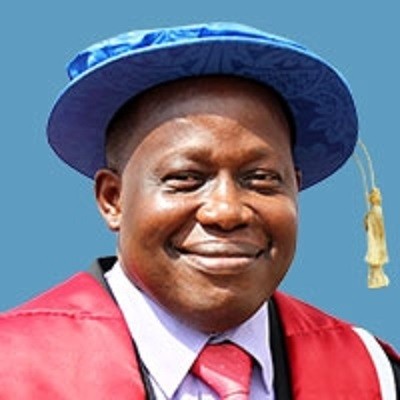
Reverend Father Prof. Anthony Afful-Broni, Vice-Chancellor of the University of Education, Winneba has reiterated the need for education in Ghana to be student-centred.
Speaking to Reverend Dr. Kwabena Opuni-Frimpong on the ‘What is next’ show, the Vice-Chancellor explained that education has different approaches or philosophies but for education to be beneficial to others, it has to be student-centred.
“In education, there are different typologies, strategies, and philosophies. I happen to believe that an education that matters and an education that will be beneficial to the. nation, one has to adopt student-centred education,” said Prof. Anthony.
Reverend Afful-Broni expatiated that it’s not about the knowledge and expertise the lecturer or teacher has to give but about the individuals at all levels who have come to seek knowledge.
This is because most of the time some students have a bit of knowledge or interest that needs to be added on.
“People will talk about the banking system for example where the teacher, tutor, lecturer or professor is the embodiment of all the knowledge and the students or the children are to go there as if they are tabula rasa or don’t have any knowledge.
“And so, they are supposed to go there and be like the ignorant attentive listeners to this expert who has all the knowledge to give them.
“There is some value to that but anybody who espouses and emphasises that is creating a major problem for the education delivery process. The teacher sometimes has to know a lot more than the student but the teacher is not the owner of the knowledge.
“Even at the kindergarten level, the children have some experience, knowledge, interest, differences in the way they perceive and understand and the way they follow. So, the teacher always has to bear in mind the child who has to be at the centre of the education delivery process,” added the Vice-Chancellor of the University of Education, Winneba.
‘It’s time to harness the strengths of the church and chieftaincy for development’ – Apostle Eric Nyamekye
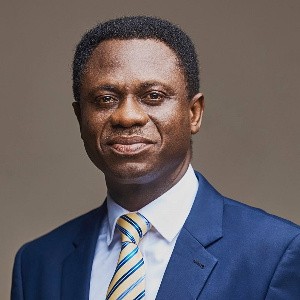
Apostle Eric Nyamekye, the Chairman of the Church of Pentecost, Thursday underscored the need to harness the strengths of the chieftaincy institutions and the church to spur development.
He said the chieftaincy institution was a major doyen of cultural heritage and the soul of the nation, with centuries of successful and well-coordinated leadership for community and societal stability.
Apostle Nyamekye, who made the call at a ceremony to inaugurate the National Chieftaincy Ministry of the Church of Pentecost in Accra, said the institution was well respected as it had the culture, tradition and governance system revolving around it.
The ministry, among other mandates, had been charged with the responsibility to institute working groups in all branches of the Church to minister to the royals (chiefs and queens) in the Church, coordinate the organisation of national royal conference, and organise training for them.
He urged Christians to do away with the view that the chieftaincy institution and its practices were fetish adding that both beliefs needed each other to coexist.
Apostle Nyamekye said the inauguration of the chieftaincy ministry was based on the Vision 2023 Agenda of the Church, in which a number of interventions had been introduced.
The ministry would be headed by Elder Nana Pimampim Yaw Kagbrese V, Chief of Yeji Traditional Area, while Elder Dr Odeneho Afram Brempong III, Omanhene of Suma, will be the Secretary.
The members are Deaconess Nana Kofi Abuna V, of the Essipong Traditional Area, Elder Dr Tassan Konja VI, the Chairman of Kpassa Traditional Area, Elder Nana Bonya Kofi VI, Chief of Baseke, and Elder Nana Akwasi Amoah Kyeretwie I, the Chief of Akyem Kotoku Traditional Area.
The rest are Nii Anokafo Afotey, Elder Ubor Augustine Nigarim Puyari, Nana Kyerew Akenten II, the Queen Mother of Mamponteng Traditional Area, Deaconess Augustina Homiah, Queen Mother of Dunkwa Subinso Traditional Area, Elder Dr Nana Kwadwo Gyasi, Apostle Vincent Anane Denteh, Director of Pentecost Men’s Ministry, Apostle Col Benjamin Kumi-Woode, the Acting Director of Air Force Religious Affairs, Ghana Armed Forces.
Nana Kagbrese, in a remark, thanked the Church for honour and pledged the commitment of members towards working to achieve their mandate, while urging the Church to support their activities.
Reverend Dr Opuni Frimpong, the Convener of the Christian Advocacy Ghana, commended the Church for the initiative noting that the ministry had fulfilled a one hundred-year old prophecy.
NEWSLETTER – AUGUST 2021, ALLIANCE FOR CHRISTIAN ADVOCACY AFRICA – ACAA
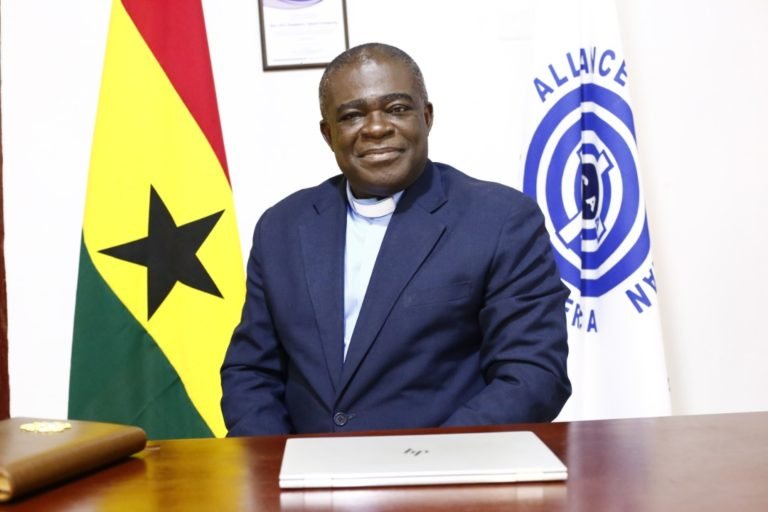
ALLIANCE FOR CHRISTIAN ADVOCACY AFRICA
(ACAA)
NEWSLETTER – AUGUST 2021
- About Alliance for Christian Advocacy Africa (ACAA).
- Objectives
- Some Recent Activities
- Volunteers and Partners
- Inspirational Quotes from the CEO

What is the Alliance for Christian Advocacy Africa?
The Alliance for Christian Advocacy Africa (ACAA) is a registered, not-for-profit, non-denominational and non-partisan Faith Based Organization.
It is a network of Individual Christian Leaders (Both Lay and Ordained) with varied Professional and Academic backgrounds who feel concerned about the current disconnect between the massive Christian presence and matters of public policy and sustainable development.
ACAA believes that with sound values and perspectives, the Faith-Based Organizations must contribute to the shaping of worldviews of the people towards social transformation.
The ACAA avoids becoming a ‘privileged partner’ for any political party or doing the bidding of any political party. The ACAA is always guided by the Bible, the national best interest, the common good of the people, and discernment through the Holy Spirit.
The ACAA though an African focused and centered is Headquartered in Accra, Ghana.

OBJECTIVES
Specifically, the ACAA shall ensure the accomplishment of the following objectives:
- Create platforms for fellowship for individual Christians (both ordained and lay) and Christian groups who are into the Christian Advocacy Ministry;
- Build networks and partnerships with other ecumenical bodies to engage governments and policy makers on good governance, integrity in governance, sustainable politico-socio-economic development, credible elections, transparency, accountability etc.;
- Mobilize individual Christian leaders (both lay and ordained) and groups for social transformation through influencing public policies with faith values and perspectives;
- Pursue Research and Advocacy on Christian contributions to social transformation and Influence on public policies;
- Develop Christian education materials for use in congregations, homes, theological seminaries etc. on the church and public policy engagements;
- Serve as a resource center for Christian education materials on advocacy, national cohesion, attitudinal change, sustainable development, good governance, etc.;
- Develop and strengthen the capacity of Christin leaders for advocacy and influence on public policies through training, sensitization, consultancy, etc.; and
- Cultivate the next generation of ethical leaders with high levels of integrity for Christian, socio-political, business, professional leadership through the formation and operations of Advocacy Clubs in Academic Institutions, Congregations, Workplaces and Communities.

SOME RECENT ACTIVITIES
- ACAA together with Ghana Broadcasting Corporation (GBC) run an educative TV talk show known as “What is Next?”
- ACAA was invited to be a member of the Peace and Reconciliation Team of All African Conference of Churches from Eight African Countries (Kenya, South Sudan, Sierra Leone, Burundi, Uganda, DR Congo Benin, and Ghana) for Post-Election Peace and Reconciliation of the DR Congo at Kinshasa, February 4-8, 2019.
- ACAA was invited to facilitate a workshop, on sustainable Peace and Leadership Development, jointly organized by All African Conference of Churches and Christian Council of Liberia, Monrovia, Liberia on June 4-6, 2019.
- ACAA was invited as the lead facilitator at a leadership conference at Angola, “Aldea ecuminica 2020, Cuanza norte Jan 2020.
- We were also invited by UNFPA for global conference, ICPD25 accelerating the promise in Narobi, Kenya. November 2019
- ACAA was invited as a facilitator in refresher training for the Eminent Persons Ecumenical Program for Peace in Africa (EPEPPA) organized by All Africa Conference of Churches (AACC) in Nairobi, Kenya, August 2021.
- ACAA has been offered observer membership status on Inter Party Advisory Committee (IPAC) of Electoral Commission.
- ACAA was invited by the Electoral Commission of Ghana (EC) to serve on its Eminent Persons Advisory Committee for 2020 General Elections.
- ACAA embarked on public education on 2020 General Education.
- ACAA was given accreditation to monitor the 2020 Presidential and Parliamentary Elections.
- We were able to observe the 2020 General Elections with 100 Pastors from different Churches and submitted a comprehensive report to, the Electoral Commission of Ghana, Some Churches, IGP and other bodies.
- ACAA was appointed as a key Resource person for media reporting by Adom TV, Subsidiary of Multi Media and GhanaWeb,
VOLUNTEERS AND PARTNERS:
ACAA has Members and Associates in Ghana and other parts of Africa, you are highly welcome to be part of the ACAA family.
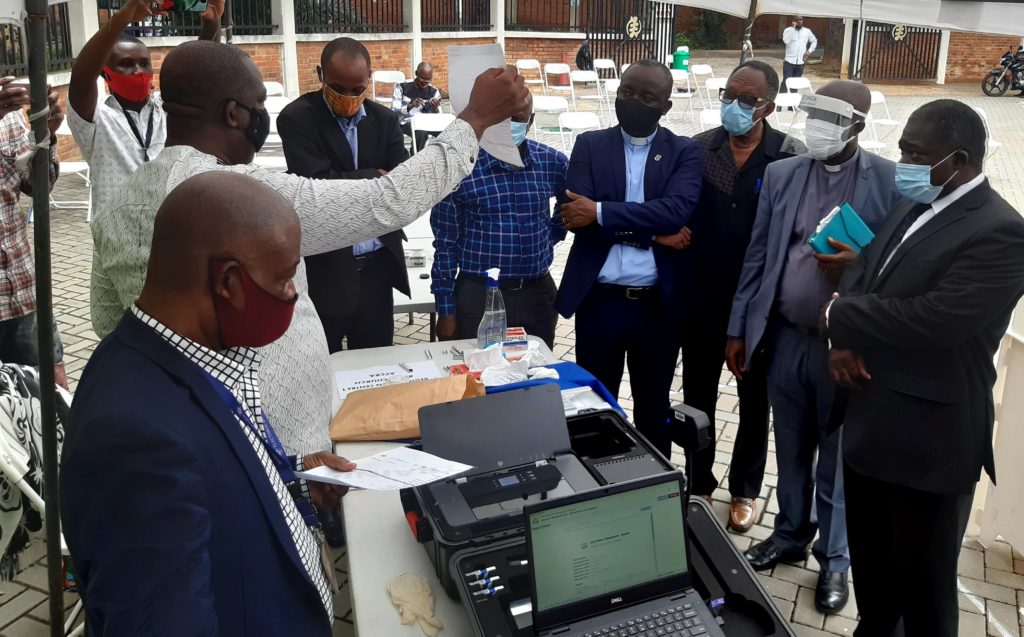
ACAA ELECTION MONITORING COORDINATORS AT THE EC 2020 ORIENTATION MEETING
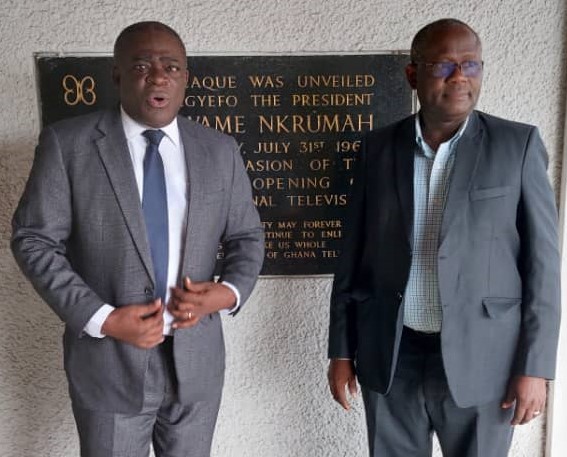
THE CEO WITH THE DIRECTOR GENERAL OF GBC, PROF AMIN ALHASSAN
For any inquiries do not hesitate to call any of these numbers:
+233(0)244801324/(0)508637747
For Donation & Support
Ecobank Ghana: 1441002217206
MTN Momo: (0240524349)
Email: alliancecafrica@gmail.com
Website: www.alliancecaa.org
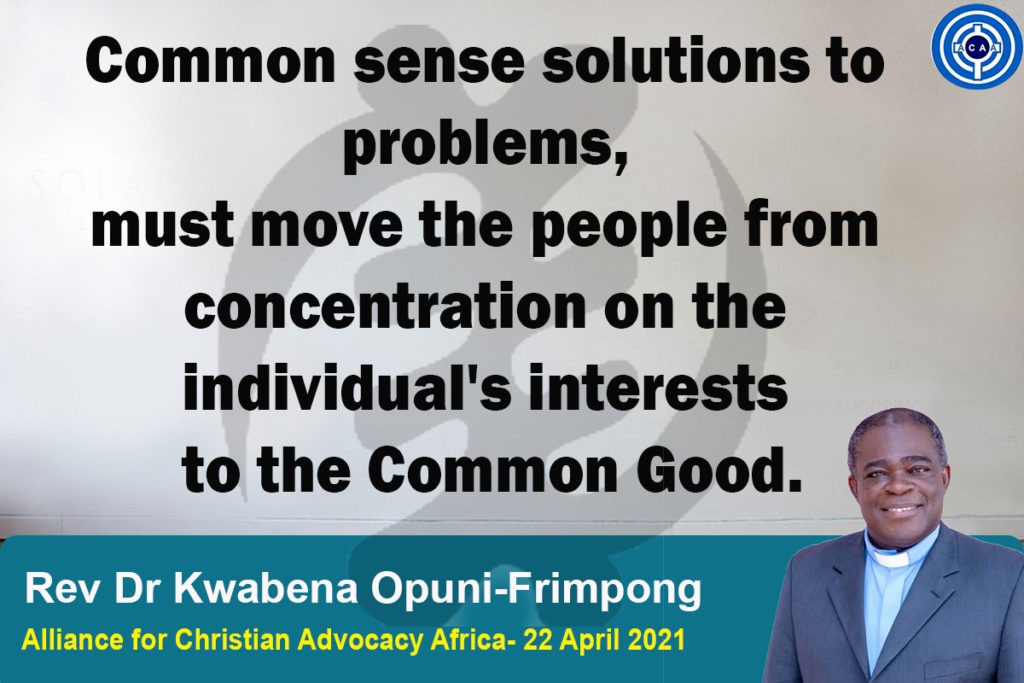
Inspirational Quote from the CEO

THE PROJECT MANAGER – JONAS TUFFOUR TWUM

Our national identity critical to Ghana Beyond Aid – Opuni-Frimpong
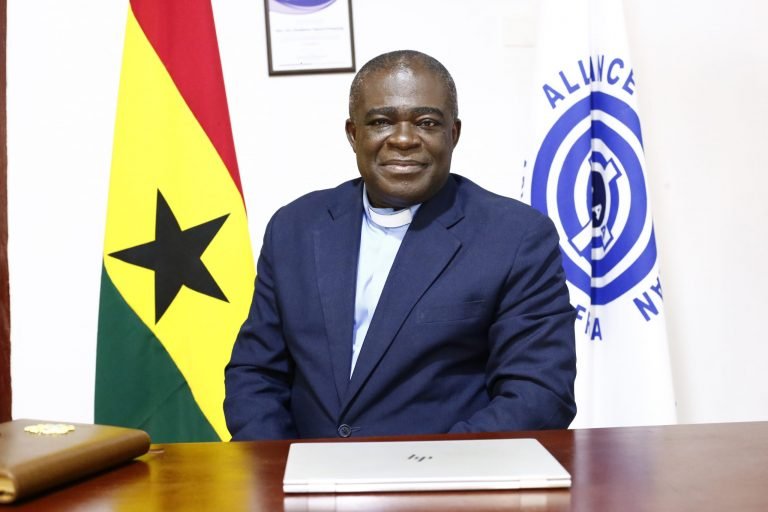
Rev. Dr Kwabena Opuni-Frimpong, the CEO of Alliance for Christian Advocacy Africa, says strategic attention must be given to cultural education, ennoblement and national identity as part of the Ghana Beyond Aid agenda.
He described the Ghana Beyond Aid agenda as a bold step launched by the government, which draws attention to the country’s sovereignty, respect and confidence to ensure a self-sustained nation and must, therefore, be supported by all Ghanaians.
“In doing that Ghanaians must not be ashamed of our cultural identity and uniqueness in our engagement with other nations and their cultures and we must value ours first to enhance our outlook on others,” he said.
Speaking in an interview with the Ghana News Agency, Rev. Opuni-Frimpong who referred to the LGBTQ issues in the country, pointed out that as a people, “We must understand and appreciate our own ways of doing things in order not to miss the values and intents in them for the benefits of development”.
He mentioned some cultural values in the sense of procreation as akin to foreign cultures and values in the context of LGBTQ, which young people must not lose sight of in their quest to adapt to certain cultures and systems.
“Yes if we want to maintain our stand against some foreign cultures, which values are inimical to ours, we may hurt our international partners and will pay a price for it, but with determination and projection of our own sense of pride and confidence, we will come out successfully and strong.”
The former General Secretary of the Christian Council of Ghana observed that Ghanaians were fast losing some societal values, which had been the bedrock of discipline and morality over the years and cited the example of the craze of parents using the English language to communicate to their children from childbirth as against the use of the mother tongue.
But research has shown that the mother tongue was the best cultural identity and respect.
“Again, the preference of western dressing as against our traditional wears and many other ‘made in Ghana products’,” he said, and indicated that there was the need for a national effort to re-orient the minds of young people.
He was optimistic that, “We could stand with the sense of pride and confidence as people with sovereignty to bargain for what we want and endeavour to work at it, no matter how long it would take”.
Don’t position yourselves for unnecessary attacks – Opuni Frimpong to MPs fronting LGBTQ+ Bill
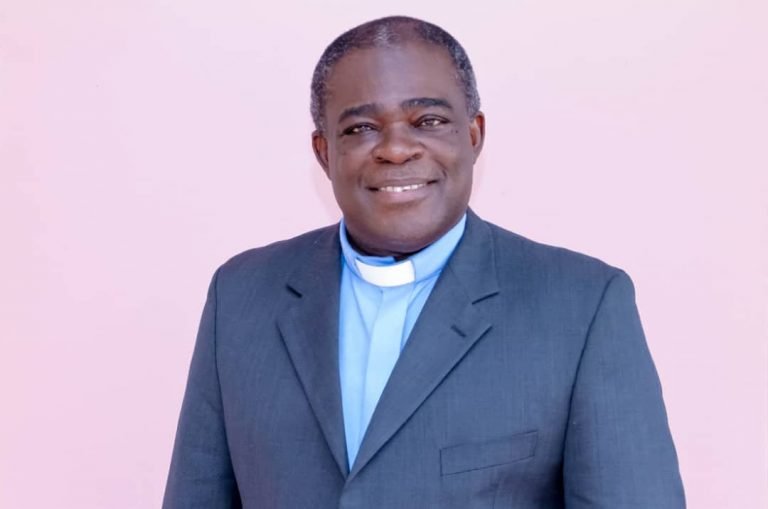
•Rev. Kwabena Opuni-Frimpong has added his voice to the ongoing debate about the draft LGBTQ+ Bill
• He says the MPs pushing for the passage need to restrain from unnecessary engagements
• He also believes their course is being backed by the entire nation
Executive Director for Alliance for Christian Advocacy Africa, Rev. Dr. Kwabena Opuni-Frimpong has urged Members of Parliament pushing for the passage of the LGBTQ+ Bill, to refrain from engaging in confrontations with critics.
Over the weekend, Twitter was rife with banters, mostly between Ningo-Prampram MP, Sam Nartey George who is heading the group and supporters and members of the LGBTQ+ community.
Sacarstic comments and subtle jabs flew from all angles and Sam George did not fail to dish out his own variety of same.
But speaking on the issue in an interview with Adom FM, Rev. Opuni-Frimpong said it is necessary that the MPs spearheading the passage of the bill compose and restrain themselves in the face of the opposition.
According to him, the move to draft the bill is only the beginning of the campaign against some activities of the LGBTQ+ community hence, engaging in banters at this point may not necessarily help the course.
“It is not their fight and so they should not position themselves for unnecessary attacks so we are praying to God that Ghana will be different.
“The people championing the LGBTQ+ course are very influential so we pray that God gives them the strength to go through because if they give in to just these insults and comments, we are not sure what will happen,” he stated.
Rev. Opuni-Frimpong also encouraged them to be unwavering in their course because the entire nation has their back.
“This is just the draft bill, we have a long way ahead of us, parliament has to make a decision before it is appended by the President.
“By all means, not everybody will support you in a democratic dispensation but the comments around from all angles, some of them are harsh.
“We are encouraging these MPs and telling them that the whole nation, speaker of parliament and parliamentarians are rallying behind them so they shouldn’t be fazed by the response and reactions.
“Don’t play politics with matters of integrity” – Opuni-Frimpong
Rev Dr Kwabena Opuni-frimpong, Founder of the Alliance for Christian Advocacy Africa (ACAA) has urged politicians not to play politics with matters of integrity.
“Political leaders must be very careful how they throw subjects that hinge on integrity into the public domain because it serves no good to our national development,” he said.
With reference to the recent emoluments committee recommendation of paying salaries to first and second ladies, he advised politicians to deal with the matter based on principles and not emotions and political scores.
“No first or second lady, whether current or past has been cited for any wrongdoing in taking what the state has offered them,” he said. “Whether as allowances or salaries it’s neither here nor there to attempt to ask anyone to return such monies to the state’s coffers.
He added, “However, any of them based on personal conviction has the right to return or reject the offer”.
The former General Secretary of the Christian Council of Ghana who said this in an interview with the GNA indicated that for the current first lady and second lady to return all allowances paid them due to public outcry was a matter of principle and integrity and therefore it would be wrong for politicians to call on past first and second ladies to do same.
He said as it stands, no court of jurisdiction had said any first or second lady had stolen money and so if due to public outcry some have returned same it was within their rights and commendable.
Dr Opuni-frimpong called on politicians to be careful with such matters, adding that they opened the floodgates for insults and mistrust when they start the politicisation of such sensitive national issues.
Mrs Rebecca Akufo-Addo and Mrs Samira Bawumia have returned all allowances paid to them by the state from 2017, according to the government.
Before that, there was a huge public outcry on why spouses of the President and his vice who enjoyed all privileges with them should be paid salaries and even equivalent to that of Ministers of state.
Some leading politicians afterward have been calling on Former first and second ladies particularly Mrs Lordina Mahama to return same.
Anti-LGBTQI+ Bill: Sponsors shouldn’t pay attention to irrelevant attacks on them – Rev Opuni-Frimpong

Former General Secretary of the Christian Council has advised the Members of Parliament spearheading the Anti-LGBTQI+ Bill, not to pay attention to irrelevant attacks on them.
Rev Dr Kwabena Opuni-Frimpong made his comment on the premise that, many Ghanaians are criticizing and attacking some individuals in Parliament, who are involved in drafting the bill.
The Rev Minister said on Joy News’ AM Show Monday, July 26, that Ghanaians should rather salute these leaders for putting up the bill, because several leaders of various organizations are in support of it.
“If you look at our Parliament, this year, they are doing very well and so many things have Gone on. Somebody may take up a position, may be, for his or her own interest but there are other things going on. I may be using your platform also, to plead with the sponsors of the bill that they should not position themselves for unnecessary attacks.
“This subject we are reflecting on is not an individual thing, but a reflection of the concerns of Ghanaians. Church leaders, Muslim leaders, traditional leaders and so many leaders have raised concerns on this issue. The government has only picked the thought of the national Consensus.
“Therefore, they must position themselves in such a way that they don’t receive unnecessary bullets and attacks,” he told host of the Show Mamavi Owusu Aboagye.
Rev Dr Opuni-Frimpong, who is also the Executive Director for Alliance for Christian Advocacy Africa, further indicated that he believes there are countries that will be looking up to the Ghanaian government to pass the bill and they will follow suit.
Thus, leaders should not relent in processing the bill and passing it into law.
“There are some European countries who are looking up to others to frown on LGBTQI+. So we must not give the impression that the entire world has accepted it. There are still areas in U.S.A and Europe that are still saying NO to LGBTQI+ society. Ghana can stand tall as a sovereign nation that knows what is good and pushes for it as the national anthem implies: God help us resist the oppressors rule,” he added.
LGBTQ+ shouldn’t be part of our national, cultural identity- Rev. Dr. Opuni-Frimpong

Former General Secretary of Christian Council of Ghana Rev. Dr. Kwabena Opuni-Frimpong is making a strong case that LGBTQ+ should not be part of the national and cultural identity of the Ghanaian society.
His comment comes at the time an Anti-LGBTQ Bill in parliament has sparked controversy with lesbians and gay advocates arguing that the bill has the tendency of stifling freedom of speech and criminalising people’s unilateral choices.
Veteran Sports Journalist and a Lecturer at Ghana Law School Lawyer Moses Foh Amoaning together with the Christian community in Ghana have been on the forefront of pushing for a specific law to criminalise activities and advocacy on homosexuality compelling seven Mod to introduce the private member bill.
Speaking in an interview monitored by African Editors on Monday 26 July 2021 in Accra, former General Secretary of Christian Council of Ghana Rev. Dr. Kwabena Opuni-Frimpong said “LGBTQ+ shouldn’t be part of our national and cultural identity”.
He noted that “I pray that Ghanaians will rally behind this journey to pass a law that criminalises homosexuality devoid of partisanship. We must win this fight not for today but for those who will come after us”.
“Family values must be protected, and so far, President Akufo-Addo and his Vice Dr. Bawumia have not given me any impression to believe that they will in future distance themselves from the fight against homosexuality including the Anti-LGBTQ+ Bill currently before parliament because, that for me will be a big disappointment”.
It has emerged in Ghana that an Anti-LGBTQ+ Bill to criminalise activities currently before parliament is receiving anger from lesbians and gay advocates who are of the view that some clauses in the bill are roadblocks to freedom of speech and expression.
Among them are Actress Sister Derby who has already clashed with Ningo Prampram MP Samuel George over the matter on Twitter, former Broadcast Journalist of Metro TV Ignatius Annor, CICLASS Fellow Dr. Edwin Coleman, Former Executive Director of Amnesty International Ghana Robert Amoafo Akoto and some celebrities who are leading advocacy for homosexuality.
CICLASS Fellow at UJ Dr. Edwin Coleman noted that the “Anti-LGBTQ+ Bill if passed into law, will be stifling freedom of speech and criminalising individual choices”.
But in a sharp reaction, Former Member of Parliament for Adentan Constituency Lawyer Adu Asare expressed shock over the criticism against the bill and insists accepting homosexuality in Ghana will amount to approval of absurdity in character where people will be at liberty to demand the rights to unacceptable feelings, desires and practices.
Lawyer Adu Asare quizzes that “Should we allow people who want to sleep with animals too? Let’s stand strong against this. We can’t accept gayism because it’s from the western world. That’s their own case”.
“Majority of our people are against LGBTQ+. If the Criminal Code is against unnatural carnal knowledge, we can’t accept it”, he said.
Anti-LGBTQ+ Bill: It’s the most ridiculous- CICLASS Research Fellow
Research Fellow at CICLASS, UJ Dr. Edwin Coleman is insisting that Anti-LGBTQ+ Bill is the most ridiculous, perverse and has little on basis in law because the bill puts roadblocks in the path of freedom of speech and expression.
Speaking in an interview by African editors on Sunday 25 July 2021 in Accra, Dr. Coleman said “There is nothing beautiful about preventing free speech. Foundation for Anti-LGBTQ+ Bill must be sound and not based on emotions. The bill in its current form has no basis in law at all”.
Dr. Edwin Coleman noted “we need to know and understand that our cultural values do not allow hatred for people. The LGBTQ+ does not protect fundamental human rights”.
“The bill is not justified. Claim that same sex is not allowed in the Constitution can be dubious”, he said.
According to Dr. Coleman, the LGBTQ+ bill is seeking to address overly complex situation in an awful manner. What cultural values are we talking about? Because Ghana’s values do not allow hate. We can’t prevent fundamental human rights of people because there is no legal justification”.
“The bill is the most ridiculous. There must be a convincing arguments before the bill is accepted and passed”
But, a Lecturer at UPSA Law School Justice Abdullai says he is in support of any bill that criminalises LGBTQ+. If we allow homosexuality, lesbianism and gayism, the absurdity will continue”.
“Practice of homosexuality has nothing to do with human rights “, he said
Meanwhile, Speaker of Parliament Rt. Hon. Alban Kingsford Bagbin has issued a strong warnings to critics who have been threatening Members of Parliament who introduced the Anti-LGBTQ+ Bill to parliament.
Ningo Prampram MP Samuel George, Alhassan Suhuyini and five other minority lawmakers introduced the private member bill to parliament to address on going issues on homosexuality but are being threatened including opposition against their candidature in the run-up to 2024 parliamentary elections.
Speaking in an interview monitored by African Editors in Accra, Mr. Bagbin said “Stop threatening MPs who introduce the bill, nobody can come and impose LGBTQ+ on us and I’m warning people who come to operate in our country. The Anti -LGBTQ+ Bill will be passed into law”.
Source : africaneditors.com
Ghanaians are looking for too much too soon – Omanhene of Agogo
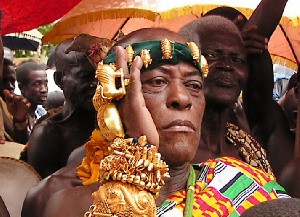
• Nana Kwame Akuoko Sarpong has said that Ghanaians should relax in expecting changes
• He explained that having seen the many stages of growth that the country has been through, time is what people need to give to things
• He spoke with Rev. Dr. Kwabena Opuni Frimpong on the ‘What is Next’ show
The Omanhene of the Agogo Traditional Area, Nana Kwame Akuoko Sarpong, has said that it is too soon for Ghanaians to be demanding so much from the government.
He explained that what the country is experiencing now is a much better version of the past and while things are not exactly perfect yet, people should give it time because all good things happen with time.
Speaking with Rev. Dr. Kwabena Opuni Frimpong on ‘What is Next’ on YouTube, Nana Kwame Akuoko Sarpong urged the general populace to be a little patient in expecting massive achievements.
“The truth is that industrialization has taken place in this country and is taking place but Ghanaians as you know, are looking for too much, too soon. When you invest in education, the results come slowly. I have passed through the stages, if I look back at what has happened between 1957 and 2021, a lot has changed but people do not see it,” he said.
He was discussing issues surrounding Traditional Leaders and Human Resource Development.
“Tread cautiously in order not to erode the public’s trust”-Rev Opuni-Frimpong
Reverend Dr Kwabena Opuni-Frimpong has observed that in efforts to meet the financial needs and resources of our political leaders, it must be done in a manner that pays equal attention to the needs of the masses in order to maintain public trust and balance. Whiles agreeing that the state must provide the resources and cater for the welfare of our political leaders in order to serve well, it must be done taking into consideration the welfare of the masses including the public sector workers who also need same resources to be able to function accordingly. “Our political leaders must be resourced to be in a better position to serve us well, however we must note that there are state institutions that must equally be resourced to serve us well too and communities which are in dire need of basic amenities to survive and we must pay equal attention in order not to erode public trust” he said. Speaking in an interview with the GNA on the provisions and recommendations of the emoluments committee of the Article 71 office holders, he said “the tendency where when it is about the article 71 office holders or the political leadership we seem to have the resources to provide their needs but when it’s for the public sector we portray that the state cannot afford is eroding public trust and it’s dangerous for our democracy” He cited for instance the 28-million-dollar loan for the Members of Parliament and that of the Members of Council of State to procure vehicles which has generated some public outcry as an example and pointed that for the state to absorb 60 percent of that loan whiles the public sector institutions were crying for resources to enhance their work output was confusing in the eyes of the ordinary Ghanaian. According to him, in spite of the fact that the loan for the Members of Parliament and other emoluments for the political class were constitutional, it creates an impression of superiority and inferiority class where the needs of a section of the population supersedes the other and described as dangerous for any democratic dispensation and must be addressed. He said with the ravages of covid-19 pandemic on the global economy, we are in a very challenging moments and the masses including the public sector workers are ready to sacrifice to ensure that the economy was put on sound track and so government must therefore thread cautiously in dealing with the requirements of the political leaders so as not to breach this trust. Reverend Opuni-Frimpong who is a Presbyterian Minister, Lecturer at the Kwame Nkrumah University of Science and Technology Kumasi and Chief Executive Officer of the Alliance for Christian Advocacy Africa (ACAA) pointed that on daily basis public institutions including hospitals and schools cry for basic facilities such as beds, water, basic medical equipment and many others in order to serve the needs of the public, to no avail. The ACAA is a network of individual Christian leaders both lay and ordained with varied professional backgrounds and not-for-profit organization concern about the current disconnect between the massive Christian presence and matters of public policy and sustainable development. “On daily basis we hear reports of children learning in dilapidated buildings nearing collapse, we hear shortage of beds in our health facilities as well as basic medical equipment to save lives of the ordinary Ghanaian, we hear public servants crying for better working conditions and pay rise and the impression is that government is working at it, yet on the other side we see provisions involving huge sums of money being made and that is a signal which must be critically looked at to enhance trust between the people and the political class” he submitted. Rev Opuni-Frimpong who is also a past General Secretary of the Christian Council of Ghana observed that such signal was pushing Ghanaians to that point where there would be no trust between the people and the political class who were voted for by the very people and urged government to sit up.
By Bertha Badu-Agyei
Ghana News Agency Koforidua
17 July 2021