
Supreme Court rules law on licence to grow cannabis in Ghana unconstitutional

0

The Supreme Court has indicated that the section of the Narcotic Control Commission Act, 2020 (Act 1019) which allows a licence to be granted to an entity to cultivate a small quantity of cannabis, popularly referred to as “wee” in Ghana for industrial and medicinal purposes is unconstitutional.

According to Graphic.com.gh report, the apex court in a 4-3 majority decision, held that Section 43 of Act 1019 violated Article 106 of the 1992 Constitution, which details the processes a bill must go through before it is passed into law by Parliament, and was therefore null and void.

“The plaintiff’s action succeeds. Accordingly, Section 43 of the Narcotics Control Commission Act, 2020 (Act 1019) is thereby declared null and void and struck out as unconstitutional as it contravenes the letter and spirit of the Constitution, 1992, particular Article 106 (2) (a) (b), (5) and (6) thereof,” the court held.

The case which culminated in the judgment was filed by one Ezuame Mannan against the Attorney-General.

Justices on the majority side were Justices Jones Dotse, Clemence Jackson Honyenuga, Henrietta Mensa-Bonsu and Emmanuel Yonny Kulendi.

Justices Nene Amegatcher, Prof Nii Ashie Kotey and Issifu Omoro Tanko Amadu dissented.

Even though the full reasons were not stated the court indicated it would be filed in the court’s registry by August 11, 2022.

What the law says

Section 43 of Act 1019 stipulates that “the Minister on the recommendation of the Commission, may grant a licence for the cultivation of cannabis popularly referred to as “wee” in Ghana, which is not more than 0.3 % THC content on a dry weight basis for industrial purposes for obtaining fibre or seed for medicinal purposes.”

Article 106 of the 1992 Constitution which is titled “Mode of Exercising Legislative Powers” deals with the processes a bill must go through before it can be passed into law by Parliament.

Article 106 (2) states that “No bill, other than such a bill as is referred to in paragraph (a) of Article 108 of this constitution, shall be introduced in parliament unless –

(a) it is accompanied by an explanatory memorandum setting out in detail the policy and principles of the bill, the defects of the existing law, the remedies proposed to deal with those defects and the necessity for its introduction,

(b) it has been published in the Gazette at least fourteen days before the date of its introduction in Parliament”

Article 106(5) of the 1992 Constitution states that “where a bill has been deliberated upon by the appropriate committee, it shall be reported to Parliament, while Article 106 (6) stipulates that “the report of the committee, together with the explanatory memorandum to the bill, shall form the basis for a full debate on the bill for its passage, with or without amendments, or its rejection, by Parliament.”

The Project Manager – Alliance for Christian Advocacy Africa

0

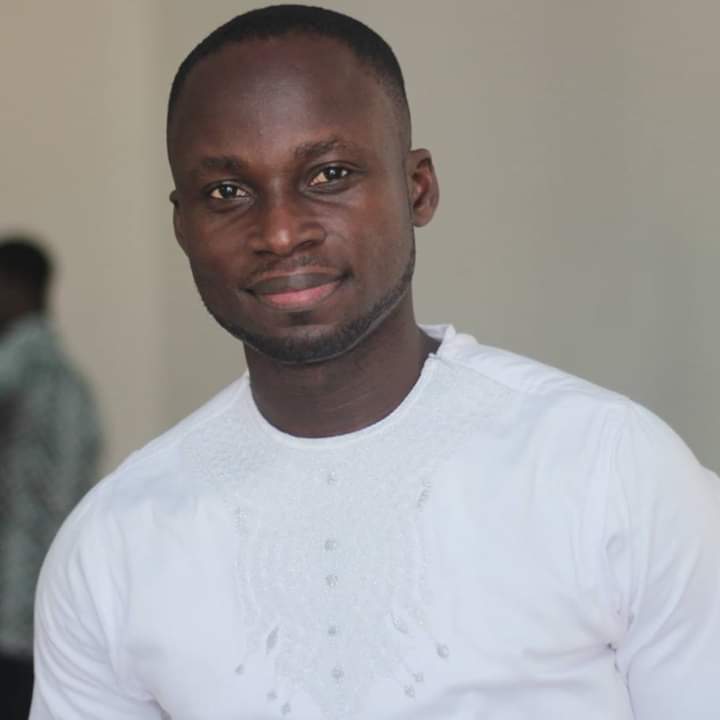
Jonas Tuffour Twum have been appointed as the Project Manager for Alliance for Christian Advocacy Africa – ACAA, his duty starts from January 4, 2020. Congratulations.

Jonas Tuffour Twum – Project Manager, Alliance for Christian Advocacy Africa- ACAA

Let’s use our pulpits to encourage our members to register with SSNIT- Rev. Opuni

0

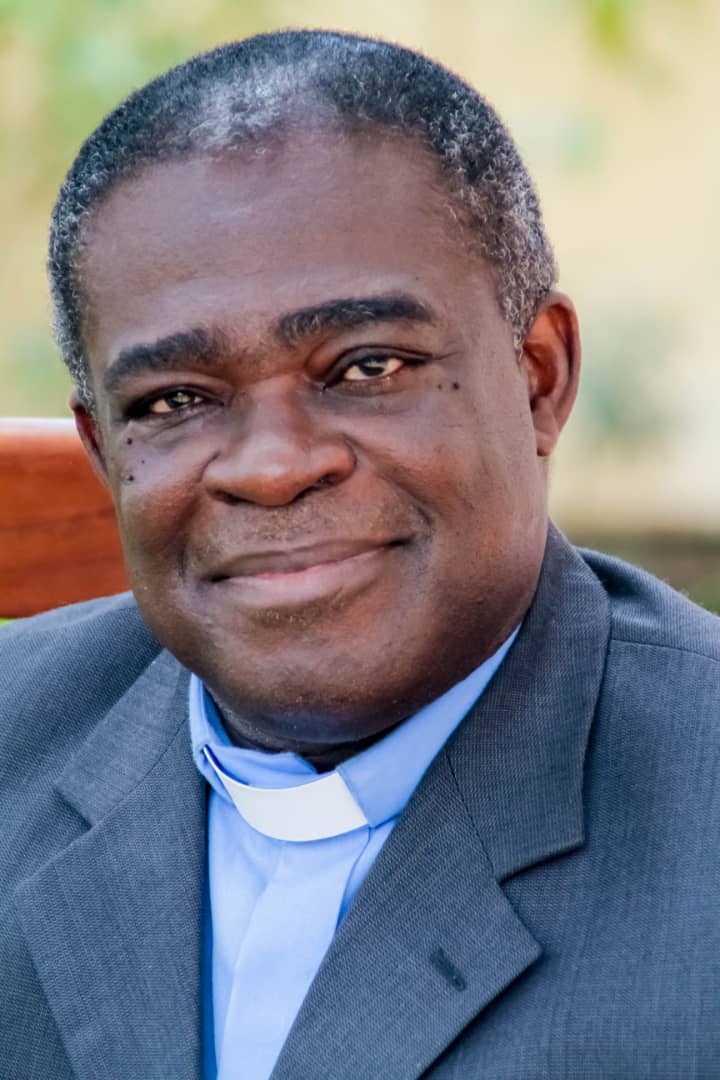
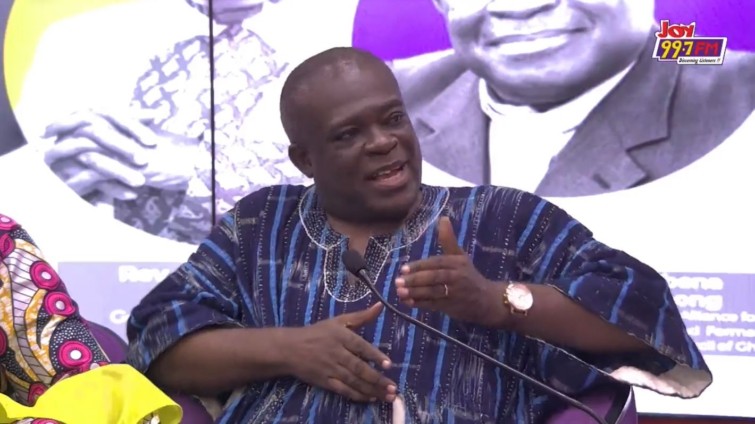
Former General Secretary of the Christian Council of Ghana Rev. Dr. Kwabena Opuni Frimpong

Former General Secretary of the Christian Council of Ghana, Rev. Dr. Kwabena Opuni Frimpong, has commended the Social Security and National Insurance Trust for engaging with the Christian community to find ways of expanding and deepening coverage of the Basic National Social Security Scheme for self-employed workers.

He said the exercise was positive since it will extend coverage to informal sector workers.

He was optimistic that the move would not only increase the scheme’s active membership and contributor base but also ensure that every worker in Ghana enjoys social protection.

He charged reverend ministers to use their pulpits to preach about SSNIT and the benefits to help reduce poverty.

He urged every Ghanaian worker to register with SSNIT so they would have insurance for the future.

He noted retiring without any social protection will be dangerous since such an individual will be a burden to family and friends.

He said, “it would be unwise and dangerous not to register with SSNIT. Registering with SSNIT, whether you are in the formal or informal sector, gives you some level of insurance after you retire from active work. As a church, we have a duty to use our pulpits to encourage our members to register with SSNIT. This will help reduce poverty and over-dependence on family relations and friends during old age.”

He was speaking at a stakeholder’s engagement organized by SSNIT recently.

Enter Into Strategic Partnership With The Church – Rev. Dr. Opuni-Frimpong To Royals

0

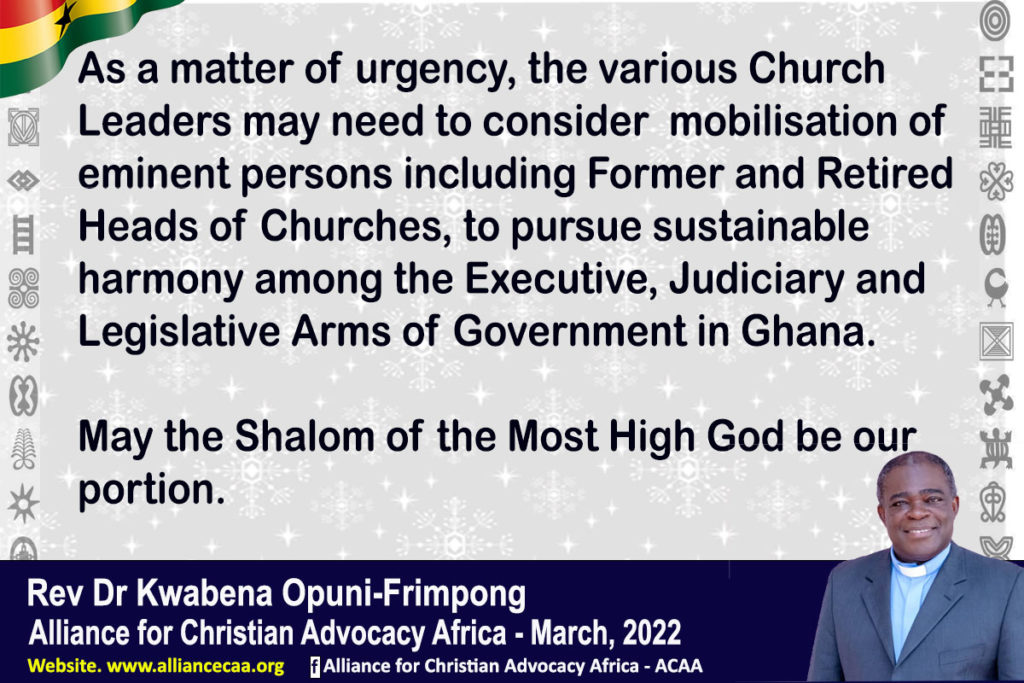
The Chief Executive Officer of Alliance for Christian Advocacy Africa, Rev. Dr Kwabena Opuni-Frimpong, has charged kings, queens and royals in Ghana to enter into a strategic partnership with the church to help them undertake socio-economic development in their communities.

“Until we are able to get strong institutions, the church and traditional leaders must come together and give hope to the people,” Rev. Dr Opuni-Frimpong said.

He said this yesterday at the Pentecost Convention Centre (PCC) during the 3rd Royals’ Conference organised by the Chieftaincy Ministry of The Church of Pentecost in collaboration with the Pentecost Men’s Ministry (PEMEM). It was attended by over 1,500 royals from Ghana, Togo, Benin and Burkina Faso.

Speaking on the topic, “The Role of Traditional Leaders in Socio-Economic Development of Ghana,” Rev. Dr Opuni-Frimpong, who is also a minister of the Presbyterian Church of Ghana and former General Secretary of the Christian Council of Ghana, expressed grave concern that the state fails to allocate funds to traditional leaders to pursue socio-economic development in their communities, apart from the royalties paid to them.

“Meanwhile, when you go into the communities, there are high expectations on chiefs to do socio-economic development,” he bemoaned.

He urged royals in Ghana to build stronger relationships with the Church to help them execute their developmental agenda, while highlighting the various interventions that churches in Ghana make to the socio-economic development of the country.

Rev. Dr Opuni-Frimpong explained that before the arrival of the colonial masters, traditional leaders pursued resource mobilisation for the socio-economic development of their communities through taxation, fines from dispute settlements, and sales of agricultural and natural resources like gold, rubber, salt among others.

He, however, noted that under the British colonial administration in the 1940’s, the British instituted the Indirect Rule which made chiefs ‘middlemen’ between the colonial masters and their subjects.

“Some prominent chiefs received scholarships and other financial supports for their children and members of their communities to study in prestigious institutions abroad,” he asserted.

The post-independence constitutions of Ghana, according to the Presbyterian minister, made some nationalists like the former President of Ghana, Dr Kwame Nkrumah, attempt to abolish the colonial rule and the chieftaincy institution at the same time for working together.

“Most of them saw the chieftaincy institution as the same as the colonial powers. Subsequent legislations through the first republic to this day have ensured that there is a gap between traditional leaders and political power in our governance system, especially access to resources for socio-economic development,” he noted.

Rev. Dr Opuni-Frimpong mentioned that the Chieftaincy Act (Act 759) considers the functions of chiefs mainly in matters of customary law and dispute settlements of succession lines to traditional stools, rather than managing the resources of their lands.

The former General Secretary of the Christian Council of Ghana iterated that in the olden days, traditional leaders fought, conquered, and took lands and kingdoms from others. However, in these contemporary times, such illegalities cannot be done since they could be jailed.

He called on chiefs to rather fight against hunger, illiteracy, diseases, tensions, poverty, poor health, injustice, unemployment, teenage pregnancies, and seek for the prosperity for their people and communities instead of fighting among themselves.

Let’s encourage our members to sign up with SSNIT – Churches told

0

Former Presiding Bishop of the Methodist Church Rev. Dr. Aboagye Mensah

Former Presiding Bishop of the Methodist Church Most Rev. Dr. Aboagye Mensah has admonished Ministers of the gospel to help create awareness and sensitize members of their congregation about the Social Security and National Insurance Trust (SSNIT) Pension Scheme.

He made the call in his closing remarks as chair at a stakeholder engagement with leaders of churches and Christian organizations to discuss ways of extending social security coverage to self-employed and workers in the informal sector.

The engagement was organized on Wednesday, June 15, 2022, at the Labadi Beach Hotel, Accra.

The respected man of God described the engagement as fruitful

“I believe we all have enriched our knowledge and some of the misconceptions you probably had about the SSNIT Scheme have been addressed.

From the discussions, it is obvious the SSNIT Scheme as mentioned by Dr. Ofori-Tenkorang, is good. I will say SSNIT has not in time past marketed the Scheme as it should. But it is better to start late than not to start all.”

He urged his fellow ministers of the gospel to accept the invitation by SSNIT and spread the word about the need for a pension.

“An invitation has been thrown to us, as Ministers of the Gospel to be ambassadors of pensions to help reduce poverty among the aged in our various congregations and the society at large.”

He added: “Since this pension program is for every worker in the country and it is backed by law, let us heed the call. We can do so by explaining what we have heard today to our colleagues and members. Where the need is, I believe if we invite SSNIT to our meetings, they will honor the invitation.

We must strongly advise members of our congregations to sign up for the SSNIT Pension Scheme in their own interest. I know, even among the clergy, there are some who are not contributing to any pension scheme. Let us ensure, fellow preachers, that we put in place the necessary structures so that we can retire in dignity.”

He argued that “whilst some ministers can comfortably retire at certain stages of their lives, most of our members because they are self-employed cannot retire comfortably. If they retire, their source of livelihood would be cut off. This challenge exists because they find themselves in the informal sector space where they do not have any structured pension plan. If they retire, they may have to rely on either family and friends or the church for survival. And there is very little the church can do considering the growing numbers of the aged.”

“It is also very difficult for these individuals, on their own, to save so enough towards their retirement. The challenge is that they don’t know how long they will live after 60 years and considering the problems that keep coming up with some investment schemes promising high returns, it puts a lot of stress on individuals to have a guaranteed source of livelihood when they are no longer able to work. Even those who are able to save, have their savings and investments run out in the cause of time.

These issues called for the state to be interested in the welfare of the aged and life after retirement hence the establishment of a national pension scheme operated by SSNIT. As you may be aware, most people believe the SSNIT Scheme is for formal sector workers. This is so, partially because of the posturing of SSNIT and its workers. In the past, they have not reached out enough but I am happy we have this engagement today,” he indicated.

He said “Among the many things, presented this morning, let me also add my voice to the Director-General’s call and plead that in the interest of the flock we shepherd, let us:

Help create awareness and sensitize members of our congregation about the SSNIT Pension Scheme.

Assist as peer educators in promoting the SSNIT scheme and the value it offers to members of our congregation and other self-employed persons.

Serve as social security champions in ensuring that self-employed persons enjoy

social protection and a decent retirement.

Act as ambassadors to help prevent poverty among our members, especially the aged.

Work together to ensure that all workers have access to reliable pensions to reduce poverty among the aged.

Encourage our members/congregants to do so.

National Cathedral: Churches must bear financial cost of construction – Opuni Frimpong proposes

0

Former General Secretary of the Christian Council Of Ghana, Rev. Dr. Kwabena Opuni Frimpong has suggested that churches must bear the financial obligations of the national cathedral.

According to him, the national cathedral will be a symbol of Christian unity when completed.

The building of the Cathedral is in fulfilment of a pledge President Akufo-Addo revealed he made to God before winning the 2016 elections.

Already, the government has demolished all structures located on the proposed site to construct the National Cathedral at Ridge in Accra, and work is progressing.

It is also scheduled to be commissioned on March 6, 2024.

The 5,000-seater auditorium project will also bequeath to the country a gracious national park for all Ghanaians, bring new skills, technology and jobs to the country and act as a beacon to national, regional and international tourists.

In 2019, the Finance Minister, Ken Ofori-Atta, said the construction of the National Cathedral is estimated to cost over $100 million. It has since been amended to $340 million.

Controversy over the construction of a National Cathedral was ignited this week following certain disclosures by both senior government officials and leading opposition figures.

Nearly GH¢ 200 million of taxpayers’ money has so far been spent on the National Cathedral project.

The Finance Minister revealed that just a little portion of the government’s annual budget has been spent on the National Cathedral.

Speaking on the state broadcaster, GTV on Sunday, Mr Ofori-Atta described the project as a righteous one that is key to national transformation and spirituality.

The Ranking Member on Parliament’s Foreign Affairs Committee Hon. Samuel Okudzeto Ablakwa says the modus operandi of government in its quest to construct the National Cathedral is questionable.

According to him, “the whole arrangement, the whole setup is just deeply embedded in illegality and lack of forthrightness.”

Perhaps it is in this light that Rev Opuni Frimpong, who is currently the Convener for Christian Advocacy of Africa, told Okay Fm’s Ade Akye Abia morning show that though the building of the cathedral has been a promise of a government, it will serve Christians right to build the cathedral for God and further prevent ongoing discussions about the financing of the project.

Moreso, he added, it will also prevent further discussions on whether or not if another government should use taxpayers’ money to build a shrine or a mosque depending on his religious belief.

“There are different religious bodies in this country, there are Buddhist, there are Muslims and even traditional worshippers. so if a government comes to power and say that government does not believe in Christianity but is a traditionalist, are we going to allow the government to use the tax payers money to build a national shrine?

“As it is said in the bible, Christians used their money and effort to build temples for God and as the current generation of Christians, we should be willing and committed to build a cathedral for the God we profess to have faith in. Building of a Cathedral should not be the sole responsibility of a government.

“It is true a government or a president promised to build a cathedral for Christians but with the current trend of conversation and analysis concerning the project, it will serve right as diligent Christians to build the cathedral for God through various contributions that will be provided by the churches. We will not offer our Lord what costs us nothing?

Background

President Nana Akufo-Addo has said he promised God a National Cathedral before he became president, and will redeem that pledge.

Launching the National Cathedral Fundraising Campaign on Friday, 28 December 2018 at the forecourt of the State House, Accra, President Akufo-Addo said just as pertained to Solomon’s dedication of the first temple to God as taught by the Bible, he knows that God cannot be contained in a physical edifice.

“Rather, and again like Solomon on that occasion, the building of the National Cathedral is to serve as a gesture of thanksgiving to God for his blessings, favour, grace and mercies on our nation, and to give me an opportunity to redeem a pledge I made to Him before I became President,” he said.

The president made a personal contribution of GHS100,000 towards the construction of the edifice at the event.

The National Cathedral, the president explained, is more than just another piece of infrastructure or national monument.

National Cathedral trustees must clear the air on alleged ¢200m from Finance Ministry – Dr Opuni-Frimpong

0

A former General Secretary of the Christian Council of Ghana (CCG), Rev Dr Kwabena Opuni-Frimpong has asked the Board of Trustees for the National Cathedral project to clear the air on the alleged release of ¢200 million by the Finance Ministry for the construction of the edifice.

He says it will be important for the trustees to provide clarifications on the matter for Ghanaians.

The North Tongu Member of Parliament (MP), Samuel Okudzeto Ablakwa, alleged in a social media post that government in 2020 released $25 million for the project without Parliamentary approval.

He said a total of ¢200 million has so far been released for the project which government said will not put undue financial burden on the state.

“On October 29, 2020; Ken Ofori-Atta on the request of Presidenty Akufo-Addo’s Chief of Staff, authorised the release of a gargantuan ¢142.7million for national cathedral ‘planned activities. ¢200 million of unconstitutional releases so far,” he claimed.

In a reaction to this, Dr Opuni-Frimpong called on the Board of Trustees to come clean on the whole issue.

“So far, I have only heard the side of the story from Honourable Ablakwa. The current trustees of the Cathedral must quickly come out and tell us whether they have received the money or not; whether churches are building the cathedral or now government has taken over.

“I want to hear their side of the story – what has changed; what have they received; what have they not received?” he said in an interview with JoyNews on Wednesday, June 8.

The former Secretary under whose tenure the Cathedral project was birthed says government, at the initial stages of the project, said it would only be a facilitator, while the churches provide funding for the project.

“The then Minister of Chieftaincy and Religious Affairs, Honourable Kofi Dzamesi, was one of those who explained to us again and again that the churches in Ghana are going to build the Cathedral and not the government.

“In a clear language, [he said] the President would give us the land and we [churches] would mobilise, and that the government would facilitate the process. We accepted that challenge that churches in Ghana, all of us are coming together to build the Cathedral,” he recounted.

Meanwhile, the Deputy Finance Minister, John Kumah, has said the amount the North Tongu MP is alleging is in the budget of the Office of the President, which makes the spending on the project legal.

Fighting terrorism is the responsibility of the state, not the church – Rev. Opuni Frimpong

0

Former Christian Council Secretary calls for proactiveness in the battle against extremism

Former General Secretary of the Christian Council, Reverend Opuni Frimpong has called for proactive steps in battling terrorism.

According to him, there is a need for Ghana to be dynamic in its fight against extremism and terrorism on the back of an upsurge in the West African sub-region.

Speaking in an interview with Okay FM following a letter issued by the Ministry of National Security urging religious institutions to take caution against terrorist attacks, Rev Frimpong said the church has a rather limiting role to play.

“With what has recently happened in Togo, we ought to be proactive. By being proactive we must increase education on extremism and how it can be prevented. We must not allow our churches and mosques to become breeding grounds for extremism. We see how some pastors speak ill against some religions by going to the extent of burning their books. Hate speech from both Christians and Muslims is something we should all guard against,” he stated.

While assuring the state’s effort to combat terrorism, the ministry of national security in its letter directed religious institutions to take some specific measures against terrorists and terrorism activities.

“These measures may include, but not limited to, the installation of CCTV cameras at designated places of worship, and engaging the services of approved Private security guards, among others.

“Although the above directive has become necessary, the Ministry of National Security assures you of our continuous resolve to institute measures aimed at safeguarding the peace and security of the country,” it stated.

Despite welcoming the ministry’s directive, Rev Opuni maintained the responsibility lies on the state to ensure security in the nation.

“If you say we should install CCTV cameras, I understand. It is understandable to say churches should provide security at their car parks to guard against thefts and other crimes. But when it comes to extremism, it is the responsibility of the state. I have read the statement and what I think is that the security agencies must put in place measures and provide us such information as well as educate the citizens on what to do.

“But if you leave it to us to take care of our security, it ought to be said that terrorism and violent extremism is beyond us. We, therefore, plead that the state institutions take full responsibility for the security of every Ghanaian wherever,” he stated.

‘I 100% support the free SHS policy’ but it’s time to review it – Palmer-Buckle

0

Archbishop Charles Gabriel Palmer-Buckle has called on government to review the free Senior High School, SHS, policy.

According to the him, despite fully supporting the policy, the time had come for the government to review it by holding broad stakeholder engagement.

He made the call while speaking at the launch of a book titled, “Accra ACA, Bleoo, The History of the Accra Academy from James Town to Bubiashie.”

Rev. Palmer-Buckle, who is the Metropolitan Archbishop of Cape Coast, explained that streamlining the policy will culminate in better education.

“I support 100% the free SHS policy. [But] It is now time to have a stakeholder engagement to review the free SHS,” he is quoted to have said.

According to him, fee payment at the SHS level has become alien to some parents, “They have divulged that to government and are blaming government,” he stressed referring to some challenged the policy is facing.

The Free SHS policy has in recent times attracted calls for review. The clergyman’s call comes after that of two top academics – Prof Quartey, a former Vice Chancellor of the University of Ghana and Prof. Stephen Adei, a former Rector of GIMPA – have called for reviews.

Free SHS is a policy of the government of Ghana, which started in September 2017.

“Every child in Ghana who qualifies for, and is placed in a public Senior High School for his secondary education will have his/her fees absorbed by the government,” the Free SHS secretariat said on its website.

Ghana’s education system should focus on developing attitudes, skills and knowledge – EU Ambassador

0

The European Union (EU) Ambassador to Ghana, Irchad Razaaly, has called for the nation’s education to be focused on developing attitudes, skills and knowledge to enable products of the system make informed decisions for the benefit of themselves and their communities.

He commended the government for the effort made so far in transforming Ghana’s education and pledged the EU’s support in this regard.

Mr. Razaaly made the call when he spoke at a networking event at the European Union Embassy in Accra last Thursday to promote the European Union-Ghana partnership on higher education.

The event brought together members of the European Union, representatives from the Ministry of Education, Ministry of Youth and Sports, Ministry of Employment and Labour Relations, former Erasmus+ scholarship beneficiaries, student organisations and representatives of various universities.

He explained that “learning in European Union centres of excellence represents a huge opportunity for the youth”.

The EU Ambassador encouraged more students and universities to join the Erasmus+ network and embrace the new exciting opportunities offered by the new phase of the programme.

The Education Minister, Dr Yaw Osei Adutwum, on his part, lauded the EU for its support for the development of the country, especially the education sector.

He announced that the attainment of the targeted 40 per cent Gross Tertiary Enrolment Ratio (GTER) by 2030 required the collective effort of all sectors and stakeholders in the nation’s education.

The Education Minister explained that although it was President Akufo-Addo who spearheaded the attainment of the 40 per cent GTER, “there was the need for all stakeholders in the country’s education to contribute their quota towards the attainment of the target which could propel our development agenda”.

Dr Adutwum announced that from next academic year, the country would start using the German dual education system which allowed students to study in school and also engage in industrial attachment alongside different time schedules.

This, to him, would ensure that “students would acquire the right skills needed before they graduate from Technical and Vocational Institutions across the country”.

He stated that everything possible is being done to ensure good collaboration between industry and academia towards the adoption of the dual system of training students.

Erasmus+ is the EU’s largest flagship initiative to support education, training, youth and sports in Europe.

Established in 1987, Erasmus+ enabled the mobilisation of more than four million students and staff from across the globe to Europe. Between 2004 and 2021, about 1,200 students and staff moved from Ghana to Europe for short-term and almost 400 students benefitted from scholarships for joint master’s degrees.

Through a bottom-up programme with annual calls for proposals, Erasmus+ provides a range of opportunities that have an international dimension, both exchanges as well as youth empowerment through education.

This year marks the 35th anniversary of Erasmus and the launch of the new phase of the programme: Erasmus+ 2021-2027.

This represents an exceptional opportunity to highlight the fruitful partnership between the EU and Ghana in education and discuss the potential for a new ambitious partnership offered by Erasmus+.

Excessive partisanship has made it difficult for Parliament to protect the public purse – Haruna Iddrisu

0

The Minority Leader and MP for the Tamale South Constituency, Haruna Iddrisu, has stated that Parliament’s inability to mount the needed vigilance on the Executive is a result of the excessive partisanship in the country.

According to him, this has also made it difficult for the Legislature, to protect the public purse.

The NDC lawmaker made these remarks, while responding to a question on the US Human Rights Ghana Report 2021, which amongst other things, blamed Parliament and other institutions for the increasing levels of corruption in the country.

“We are not doing sufficiently as an institution and Parliament is bucked down to excessive partisanship. We are exercising our mandate appropriately to protect the public purse. Why will Parliament not be interested in probing into COVID expenditure? Who loses? Who gains? It’s the citizens of Ghana. Any matter of probe can only enhance probity, transparency and accountability.

So if Parliament cannot even probe into a matter like COVID, where donors are concerned about the prudent and optimum utilisation of resources they invested to combat this public health pandemic, then what do you expect of Parliament?”, he quizzed.

The legislator added that, other lapses on the part of Parliament includes the delay in the approval of contracts, and the lack of the rigour and robust mechanisms, to ensure value for money. This he indicated contributes to the country’s failing fight against the menace of corruption.

The U.S. Department of State in its 2021 Annual Country Reports on Human Rights Practices observed that corruption is still prevalent in Ghana.

According to the document, “officials frequently engaged in corrupt practices with impunity”.

It also noted that although laws stipulate punishments for corrupt officials, the government hardly implements them effectively.

“Corruption was present in all branches of government, according to media and NGOs, including recruitment into the security services”, parts of the report read.

Citing the Auditor General’s June Report, the US States Department mentioned that graft is widespread in the country’s public sector.

This, has resulted in the loss of huge sums of public funds.

“The Honorary Consul General and the Ghanaian consulate in Washington D.C. could not account for visa fees totalling $355,000. The Free Senior High School Secretariat misspent more than $3.16 million.

“A former Minister of Tourism retained three official vehicles for personal use after leaving office. The report concluded that corrupt practices resulted in $340 million of financial mismanagement, including misapplication and misappropriation of funds, theft, and procurement mismanagement”.

Corruption continues to be a major problem the country battles with although governments implement various measures to curb the menace.

In 2018, President Akufo-Addo, established the Office of the Special Prosecutor to clamp down on corruption.

However the US State Department noted that “Since the first Special Prosecutor took office in 2018, no corruption case undertaken by that office resulted in a conviction”.

“When the new special prosecutor took office in August, his staff included one investigator and one prosecutor, both seconded from other offices”.

Meanwhile, the report also revealed that the 2020 general election was transparent, free and fair.

According to the report, despite violent scenes at some of the centres, the verdict, which saw President Akufo-Addo winning another term to govern Ghanaians, was very credible.

The report released on April 12, 2022, said Ghana’s Presidential and Parliamentary election results reflected the will of the people.

NMC bemoans lack of funding for initiative to ensure safety of journalists

0

The Chairman of the National Media Commission has bemoaned the lack of funding for an initiative that was engineered to see to the safety of journalists in the country.

According to Yaw Boadu-Ayeboafo, the initiative which was being developed with support from government and UNESCO hit a snag after funding to see it take fruition ceased coming from the government.

Speaking on JoyNews’ PM Express on Wednesday, he revealed that the initiative was being designed to monitor and evaluate the safety of journalists operating in Ghana.

“In 2020 there were attempts at developing this mechanism with support from UNESCO. Initially the Ministry of Information felt that it was the body that was to handle that. There were a lot of suggestions that the National Media Commission is better placed to handle that matter.

“Eventually the government came back and accepted that the coordinating mechanism for the safety of journalists must be a responsibility that must be ceded to the National Media Commission and therefore that was done.

“But it requires that we develop, I mean, mechanisms that will monitor, measure and take account of such things and will require funding,” he said.

He was replying to the Ministry of Information’s reaction to the 2022 Press Freedom Index which saw Ghana drop 30 places from 30th in 2021 to 60th in 2022, the lowest in 17 years after Ghana had placed 66th in 2005.

According to the Report, Journalists’ safety has deteriorated sharply in recent years. In 2020, reporters covering the effectiveness of anti-Covid-19 measures were attacked by security forces.

Also, political leaders are making death threats against investigative journalists. Nearly all cases of law enforcement officers attacking journalists are not pursued.

The Ministry of Information in reaction had stated that to ensure journalists safety, it was working with the NMC on an intervention called the Coordinated Mechanism on the Safety of Journalists.

It further added it will be collaborating with the NMC to see to the full execution of the intervention.

However, with the funding from government not forthcoming, the NMC says it is currently liasing with UNESCO to access funds for the development of the initiative.

“The funding has not been forthcoming and so we are at the stage where we need to get consultants to help develop the standards that will be used in measuring some of those things so that at least they will be in tandem with universal standards by way of measuring what the safety of the journalist are.

“So we are working with UNESCO on getting some funding and some consultants to develop that scheme. That is where we are now,” Yaw Boadu-Ayeboafo said.

Strengthen NMC to deal with infractions in the media space—Rev Opuni-Frimpong

0

The National Media Commission (NMC) must be well resourced and strengthened to deal with infractions in the media space and deepen Ghana’s democracy.

“The problem we have as a nation with an overly partisan public is partly due to the media which is supposed to amplify the voices of the unheard, but has now become mouthpieces of political parties and political activists”.

According to Revrend Dr Kwabena Opuni-Frimpong, a former General-Secretary of the Christian council of Ghana, politicians setting up media outlets was a canker eating into the fabric of the media landscape and must be checked to prevent untoward situations.

Sometimes the editorial of media houses which are supposed to be neutral is so tilted and biased and that is why as a country we must resource the NMC to be well positioned to deal decisively and objectively with this situation” he added

Rev Opuni-Frimpong, who is also the Chief Executive Officer of the Alliance for Christian Advocacy, made the observation at a public lecture as part of activities to mark centenary celebration of the Akuapem Presbytery of the Presbyterian Church of Ghana (PCG) in Koforidua.

He said the NMC must have a way to shape the media industry to be a potent tool to advance the cause of national development, otherwise this seeming threat of media spaces owned by politicians and used to entrench positions was dangerous to democracy.

“The twisting of every national discourse depending on which media space it is coming from and which political party is in power is undesirable in this dispensation because its silencing wisdom voices” he warned.

“Eventhough Article 162 of the Constitution does not discriminate against ownership and operations of the Mass Media, many have expressed grave concern of that phenomenon and have thus called for Strengthening of the NMC to deal with it.”

Speaking on the theme “The Church as an Agent For Consolidating Democracy, Economic Transformation And social Equity in Ghana: Prospects And Challenges” Rev Opuni-Frimpong indicated that the Church could not afford to keep quiet on national matters.
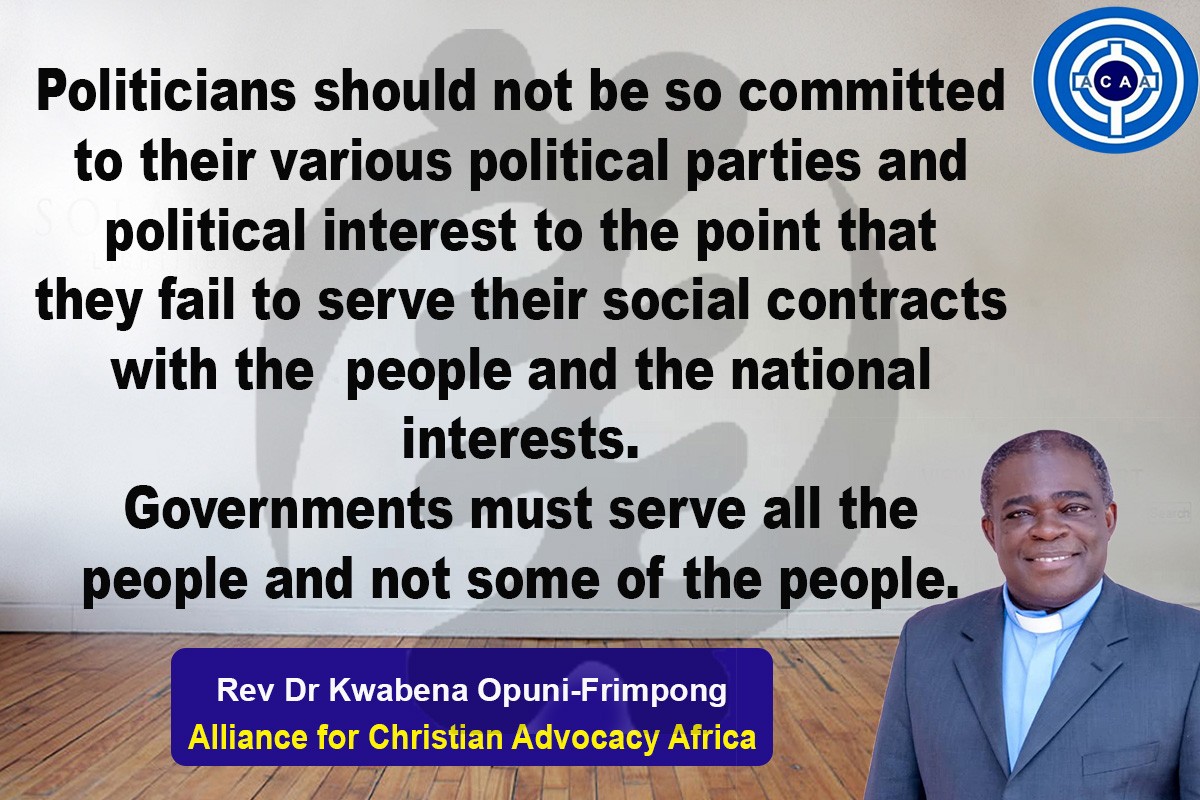
The Church could not sit idle in the pursuit for social and economic transformation because leaders do not refer to only elected political leaders but all leading any group of people in society must stand rise to that call if responsibility.

In that direction, he said the PCB has shown the way by providing the infrastructure in education and health basically for the public good and advancement of society and called for active Christian participation in the national affairs.