Politicisation of judiciary has triggered unrest in African countries – Ibn Chambas warns

0

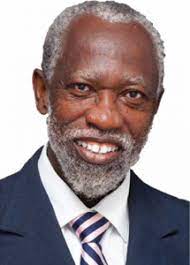
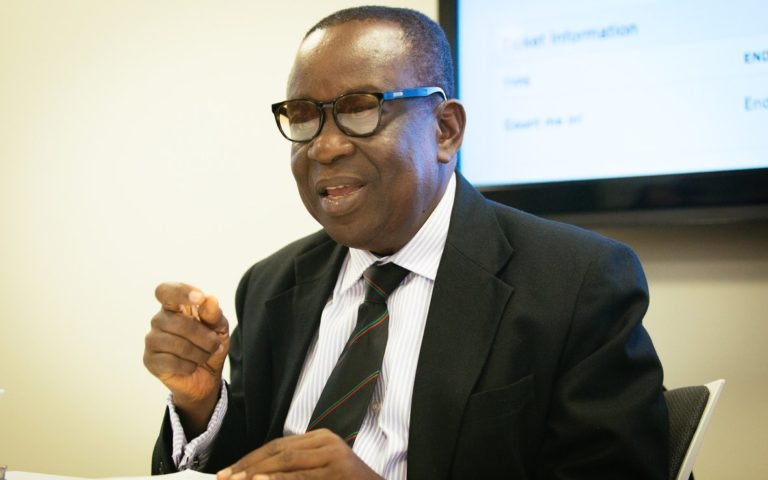
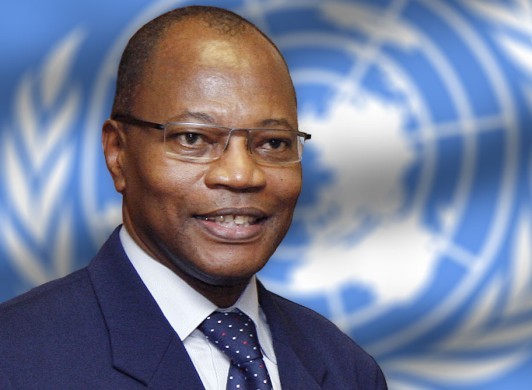
Dr Mohamed Ibn Chambas, a former President of the Economic Community of the West African States (ECOWAS) Commission, has cautioned of the consequences associated with politicising democratic institutions.

He mentioned specifically the case of the judiciary and elections management bodies.

According to him, doing so has resulted in instances of political instability in most African countries despite those countries signing up for democracy.

“Whilst majority of Africans accept elections they perceive the announcement of the results from the last elections in their countries as inaccurate.

“Another survey shows that election management bodies are one of the established public institutions. When political actors perceive an election management body, as lacking independence, it breaks down the trust and confidence in the process and makes it difficult for parties to accept the outcome of the process.

“The politicization of the judiciary in a number of counties to influence election results or to elongate the mandate of certain presidents has contributed to political instability,” Dr Mohamed Ibn Chambas said.

He questioned how it is that despite periodic polls across Africa, surveys continue to show a decline in democratic principles year in and out.

“African states have organized regular elections without question but democracy continues to decline. Why are these elections not moving us towards the promised lands of development, peace and stability?” he questioned.

“There is a growing dissatisfaction with electoral processes that is fueling the emerging trend of violence and non-acceptance of electoral outcomes,” Dr Ibn Chambas stressed.

Dr Mohamed Ibn Chambas made these remarks while speaking at the ‘Regional Lessons Learned and Experience sharing’ Workshop organized by the West African Network for Peace Building on Tuesday, April 26.
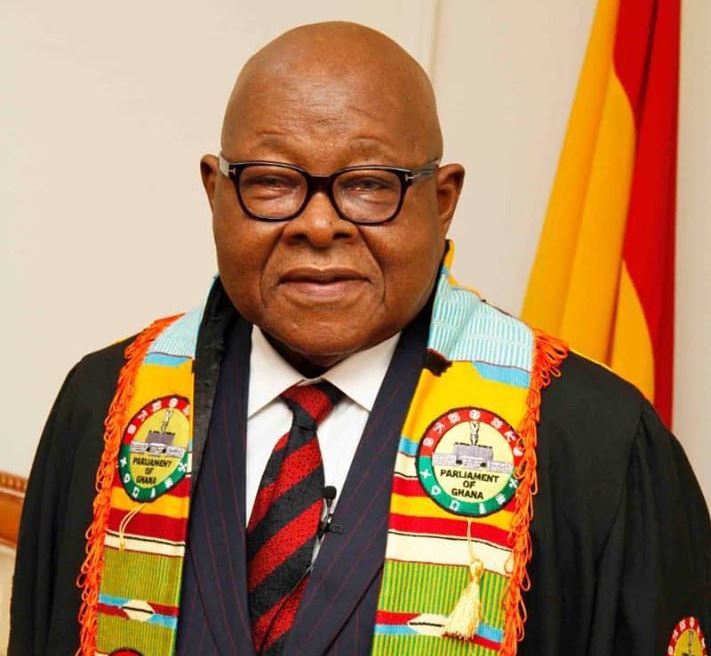
Prof Mike Oquaye calls for reforms in appointment and removal of judges

0

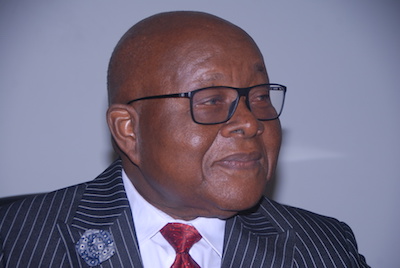
Professor Aaron Michael Oquaye, former Speaker of Parliament, has called for reforms in the appointment and removal of judges in the 1992 Constitution to strengthen the country’s judicial system.

Prof Oquaye recommended the appointment of two retired Supreme Court Judges nominated by the Roll of Retired Supreme Court Judges, two Senior Lawyers nominated by the Ghana Bar Association, three other persons nominated from the Christian Council, the Catholic Secretariat and the Muslim Council.

These appointments, he explained, would do a better neutral job than the current structure in the 1992 Constitution.

The former Speaker of Parliament was speaking at the launch of Professor Michael Oquaye Centre for Constitutional Studies in Accra organized by the Institute of Economic Affairs, Ghana.

The Centre, established within the Institute will help address the deficit in the country’s Constitution.

The Centre will assist to bring constitutionalism in all the country does, translate the Constitution to the simplest terms and local languages with illustrations.

It will be taught in schools, churches, mosques and civil society generally, to live by the tenets of the Constitution.

Regarding the removal of Judges, Prof Oquaye said the case of Justice Amua Sekyi gave the country the lesson that where the Executive was bent on removing a Judge, it was easier to do so than meets the eye.

“If under Article 146 of the Constitution, the President receives a petition for the removal of a Judge, the President should refer the matter to the Chief Justice (CJ).

“If the CJ is of the view that there is a Prima Facie case, the CJ sets up a committee to investigate the complaint. Three Supreme Court Judges, two other persons (not Lawyers nor from Council of State or parliament), should make a recommendation to the Chief Justice for the suspension of the judge and forwarded to the President for action, “he said.

On decentralization, the former Speaker of Parliament recommended that one-third of appointments by the President should be left to women, and that political parties should operate at the local level.

He said all Chief Executives of Districts, Municipality and Metropolis should be elected to “wean” them off executive control and that District Assemblies’ elections should be two years away from national elections.

On appointment of Council of State members, he suggested the need to introduce institutional and representation and not allow the President to choose his advisors, because the 1992 Constitution gave the President too much power in the appointment of the members.

“We need to adopt the Recommendation of the Committee of Experts which provided that “the Council of State shall aid and counsel the President, the Council of Ministers, Parliament and other organs of State in the performance of their functions under the Constitution or under any other law (Section 3(i)),” he said.

The selection of ministers from parliament has weakened parliament – Prof Oquaye

0

Prof. Aaron Mike Oquaye has lamented that the constitutional provision that allows for a president to appoint ministers from among Members of Parliament greatly affects the overall legislative work of the country.

The former Speaker of Parliament explained that this practice has continuously weakened parliament and has built an entitlement mentality in the minds of MPs who particularly are from the ruling party.

“The general observation is that this has weakened parliament. MPs look forward to becoming ministers, those who are not appointed as ministers, once their party is in power, feel left out, in some cases, disappointed constituents vote against them as at primaries, contribute to the huge attrition rate of MPs.

“The legislative work of parliament suffers because this is the second attraction to an MP’s oversight responsibility and accountability. They become ineffective sometimes as majority of MPs bend to the executive, praying that MPs fortune will shine on them by becoming ministers. The accompanying effect is that MPs who do not become ministers are sometimes made board members of state corporations as a compensation. This also leads to conflict of interest, i.e. those who have oversight responsibility over the very corporations are, or may be compromised,” he said.

Speaking at the launch of the Professor Mike Oquaye Centre for Constitutional Studies at the Institute of Economic Affairs, Ghana (IEA Ghana), the political science scholar stressed that this provision of the law makes such MP-ministers less-performing in their roles.

He also suggested that there be a review of what the 1979 constitution said about such political arrangements, vis a vis what the 1992 constitution currently says.

“MP-Ministers hardly have time for effective legislative work, thus affecting the qualitative performance of Minister-MPs. One tragedy of our system is that although a vote of censure against ministers is provided for, i.e. Article 8 clause 5 of the constitution, nonetheless, a vote of censure cannot remove the minister because the discretion rests with the president whether to remove or not remove such a minister after parliamentary censure.

“Notably, under the 1979 constitution, no MP could also be a minister. We need to review this in order to strengthen the position of the MPs. Also, a vote of censure would necessarily lead to removal under the 1979 constitution. Why we should dilute the 1992 constitution despite the stronger version of 1979, is something that we may want to wonder about,” he said.

President has too much power in selecting members of Council of State – Former Speaker of Parliament

0

A former Speaker of Parliament, Prof. Aaron Mike Oquaye, has said that no president should be allowed to appoint the people who form the Council of State.

He explained that seeing that the primary role of the Council of State is to offer advice to the president, there the need for some neutrality so that they can effectively provide sound advice to the high office.

Speaking at the launch of the Professor Mike Oquaye Centre for Constitutional Studies at the Institute of Economic Affairs, Ghana (IEA Ghana), the political science scholar said the current provision that allows the president to make his own choices for advisors is just too much.

“The president has too much power in the appointment of the Council of State members. There are three categories of members. First, are the representatives of the regions. The president may influence but does not appoint. Second, four persons who represent institutions, for example, former Chief Justice, former CDS, former IGP, and President of the House of Chiefs. If more than one person is available and eligible, the president has a choice.

“Third, the president has a free hand in choosing eleven other persons from the regions,” he explained.

Prof Aaron Mike Oquaye further clarified why he believes such an arrangement makes the president too powerful.

He said that there is the need for the emulation of the traditional system of selecting elders who serve under chiefs across the country.

“It should be pointed out that customarily, no chief in Ghana in Ghana has the power to appoint his elders and advisors in this way. The elders are heads of the various lineages that come to the council by right. We need to introduce institutional and representative participation and not allow the president to choose his own advisers,” he said.

We can’t speak for your political parties – Dr Opuni Frimpong tells critical media over silence of clergy

0

Former General Secretary of the Christian Council of Ghana, Rev. Dr. Kwabena Opuni-Frimpong has revealed that the conduct of some ‘partisan media’ is the reason some clergy men are unable to speak on national issues.

In recent times, the clergy have come under fire by some media houses for relenting on criticising the unpopular and harsh policies of the Akufo-Addo government unlike they did during the erstwhile Mahama administration.

Popular among media personalities who have called out the clergy over what they describe as wanton dissipation of public funds by the NPP government coupled with a failing economy are Onua TV’s Captain Smart, Power FM’s Prince Minkah, Okatakyie Kwame Afrifa Mensah, Mugabe Maase among others.

Dr. Opuni Frimpong did not mention the names of these personalities or their organisations but was quick to say that then lack of editorial policies in some media houses are “silencing voices of wisdom in the country”.

“The challenge of extreme partisanship has a lot to do with the Ghanaian media at the moment and the owners of the media houses. Because we have people who have specific political interest setting up media houses using those media houses to pursue their political interest,” he said.

So sometimes you are not sure of their editorial policy because people sit down and say all manner of things and nobody stops them.”

”Some of us are suffering from these media houses because when you speak the truth they will not even listen to you, they will even insult you. They always expect people to speak in favour of their political parties. That is gradually silencing the voices of wisdom in Ghana,” Dr. Opuni Frimpong stated.

He made these remarks while speaking at a public lecture as part of activities marking 100 anniversary of Presbyterian Church of Ghana- Akuapem Presbytery Ascension Congregation in Koforidua.

The event was under the theme “The Church as an Agent for Consolidating Democracy, Economic Transformation and Social Equity in Ghana: Prospects and Challenges.”

According to him, the Christian Council speaks when necessary therefore there should not be an impression that those with voices of conscience are in bed with the government.

To justify the seeming silence on their part, the renowned clergy man said, “What is amazing is that some of the things we are saying today have been said in the past but when these politicians are in opposition and you say some of these things they receive it in good faith and even congratulate you but when they are in power they don’t want to hear these same words.“

“ It is a political strategy because when they are in opposition they cry differently but when they are in power the sound also changes”

Rev. Dr. Opuni Frimpong also raised serious concerns over the rate at which politicians are establishing radio and TV stations for aggrandizement.

He called on the National Media commission to strictly enforce ethical standards in the media space.

“Until the National Media Commission intervene to address the issue with the owners of media houses how to eliminate partisanship of the media and pave way for objectivity to take it course, then we will have a long way to go as a country,“ he lamented.

Don’t be swayed by politicians …Rev. Dr Frimpong tells state institutions

0

A former General Secretary of the Christian Council of Ghana, Rev. Dr Kwabena Opuni Frimpong, has advised state institutions not to allow themselves to be influenced and politicised by politicians in the country.

He said due to their enormous mandate to ensure checks and balance, indispensable for good democratic governance, allowing themselves to be politicised would cause the public to lose confidence in them and that would not auger well for Ghana’s democracy.

“State institutions must not give an impression that they are at one side of the political divide all the time else the public will lose confidence in them which is dangerous to sustaining our democracy. We must be careful not to over politicise our state institutions,” he said. 

Delivering a lecture in Koforidua last Friday, Rev. Dr Opuni Frimpong said “It is necessary that state institutions be seen as fair in all issues in order to sustain the democracy of the country as well as public confidence.”

The event, which attracted many church members and non-church members, was on the theme: “The church as an agent for consolidating democracy, economic transformation and social equity in Ghana: Prospects and challenges”. 

Buttressing his call for state institutions to guard against being politicised, Rev. Dr Opuni Frimpong cited the recent comments made by the Minister for National Security, Mr Albert Kan-Dapaah, who stated that Ghanaians would start accusing the judiciary and would not have confidence in them if the interpretation of the law was tilted in the government’s favour all the time.

“The comment should be a caution to all of us,” Rev. Opuni Frimpong said, expressing worry that the emergence of over politicisation of state institutions which encouraged what he called dictatorship of the majority, where the majority in government appeared to carry the day in any issue all the time.

In his view, dictatorship of the majority was equally dangerous much like dictatorship the military posed to the country’s democracy.

 “Church leaders must be objective and fair in their comments and say it as it is for the benefit of the whole country,” he advised.

For his part, the Eastern Regional Minister, Mr Seth Acheampong, said such public lectures were necessary to educate Christians in government and to build their capacity for the development of the country.

“We need to also ensure that we abide by the basic principles of life that we are taught by our church leaders in our church services and I believe if we do as Christians we will go through a certain pathway that would transform our beautiful republic for the better,” he stated.

FROM AMA TEKYIWAA AMPADU AGYEMAN, KOFORIDUA

‘Partisan media’ silencing the clergy on national issues – Rev. Opuni Frimpong

0

Former General Secretary of the Christian Council of Ghana, Rev. Dr. Kwabena Opuni Frimpong, has said ‘partisan media’ and the lack of editorial objectivity are preventing some clergy from speaking on national issues.

The clergy and some civil society organizations, in particular, have been accused of being silent on critical issues of national interest since the ruling New Patriotic Party assumed office.

However, Dr. Kwabena Opuni Frimpong blames partisan media for “silencing voices of wisdom in the country.”

“The challenge of extreme partisanship has a lot to do with the Ghanaian media at the moment and the owners of the media houses. Because we have people who have specific political interests setting up media houses using those media houses to pursue their political interests. So sometimes you are not sure of their editorial policy because people sit down and say all manner of things and nobody stops them.

“Now partisanship and lack of objective editorial policy in the Ghanaian media is what is fueling the over partisanship challenges, too much of almost anything. Some of us are suffering from these media houses because when you speak the truth they will not even listen to you, they will even insult you. They always expect people to speak in favor of their political parties that are gradually silencing the voices of wisdom in Ghana,” Dr. Opuni Frimpong lamented.

He said this while speaking at a public lecture as part of activities marking the 100 anniversary of the Presbyterian Church of Ghana- Akuapem Presbytery Ascension Congregation in Koforidua.

The event was under the theme “The Church as an Agent for Consolidating Democracy, Economic Transformation and Social Equity in Ghana: Prospects and Challenges.”

He, however, stressed that Christian Council continues to speak when necessary therefore the impression should not be created as if the council is engaging in a partnership of convenience with any political party.

“What is amazing is that some of the things we are saying today have been said in the past but when these politicians are in opposition and you say some of these things they receive it in good faith and even congratulate you but when they are in power they don’t want to hear these same words. It is a political strategy because when they are in opposition they cry differently but when they are in power the sound also changes.”

Rev. Dr. Opuni Frimpong also said the rate at which politicians are establishing radio and TV stations for aggrandizement, calls for the intervention of the National Media commission strictly enforce ethical standards in the media space.

“Until the National Media Commission intervenes to address the issue with the owners of media houses on how to eliminate partisanship of the media and pave way for objectivity to take its course, then we will have a long way to go as a country.

Stop Attacking Voices of Wisdom in Public Discourse – Rev. Opuni

0

Former General Secretary of the Christian Council of Ghana, Rev. Dr. Kwabena Opuni Frimpong has lamented over the fact that so many political party gurus are now setting up media houses.

According to him, this has resulted in ‘partisan media’ which is silencing the clergy and other critical voices on national issues.

Speaking at a public lecture as part of activities marking 100 anniversary of the Presbyterian Church of Ghana-Akuapem Presbytery Ascension Congregation in Koforidua, Rev. Opuni said some media houses no longer care about objectivity.

“The challenge of extreme partisanship has a lot to do with the Ghanaian media at the moment and the owners of the media houses. Because we have people who have specific political interests setting up media houses using those media houses to pursue their political interests. So sometimes you are not sure of their editorial policy because people sit down and say all manner of things and nobody stops them,”Rev. Dr. Kwabena Opuni Frimpong indicated.

He said people who try to speak the truth are now sidelined and insulted when their comments do not go with the interest of these media houses and their owners.

“Now partisanship and lack of objective editorial policy in the Ghanaian media is what is fueling the over partisanship challenges, too much of almost anything. Some of us are suffering from these media houses because when you speak the truth they will not even listen to you, they will even insult you. They always expect people to speak in favour of their political parties that are gradually silencing the voices of wisdom in Ghana,” the former General Secretary of the Christian Council of Ghana stressed.

According to Rev. Opuni, it is high time the National Media Commission intervene to address the issue with the ownership of media houses and ensure that partisanship of the media is eliminated to pave way for objectivity to take its course.

He insists that it is only when this is done that the country will progress and develop.

The public lecture put together as part of activities marking the 100 anniversary of the Presbyterian Church of Ghana was organised on the theme “The Church as an Agent for Consolidating Democracy, Economic Transformation and Social Equity in Ghana: Prospects and Challenges.”

Avoid Dictatorship of the Majority at all times.– Rev. Opuni warns

0

A former General Secretary for the Christian Council of Ghana Reverend Dr. Kwabena Opuni-Frimpong has warned against what he calls majority dictatorship and politicization of state institutions in the country stating that it is as dangerous as military rule.

He said state institutions such as the judiciary and security agencies must not be politically influenced to perpetuate majority dictatorship but rather must be allowed to operate freely without fear or favor.

Rev.Dr.Kwabena Opuni-Frimpong, therefore, stressed the recent comment by the National Security Minister Albert Kan Dapaah who warned that the perception of judicial bias in favour of the government is a threat to the peace and stability of the country, must be taken seriously and addressed.

“We must be careful about the politicization of state institutions. We are aware the recent statement by the Hon. Minister of National Security is causing trouble here and there.

But I want to take it as a caution statement that we must be very careful. Our judiciary, the legislature, security agencies, academic institutions we must make sure that our democracy is strong, strong to the point that it serves all but if we give the impression that if you belong to this class of people or group of people you will always get what you want but if you don’t belong to this class of people that is what we call dictatorship of the majority it is as dangerous as a dictatorship from, say military”.

He added, “So we should not only have our eyes on dictatorship coming from the military but dictatorship coming from the majority is equally dangerous and Ghana must avoid dictatorship from the majority and the way to do it is to free state institutions from over politicization”.

Rev.Dr. Opuni-Frimpong said this during a public lecture organized by the Presbyterian Church of Ghana Akuapem Presbytery Ascension Congregation in Koforidua under the theme “The Church as an Agent for Consolidating Democracy, Economic Transformation and Social Equity in Ghana: Prospects and Challenges”.

He said some African countries that went on that tangent are currently facing political instability and democratic crises.

He stated that such countries deviated from the practice of democracy as the ruling governments use their majority advantage in parliament to impose their political will and their parochial interest on the people to the extent of amending aspects of the constitution to prolong the tenure of office of their presidents.

Rev.Opuni-Frimpong sounded caution that political actors in the country should not drive Ghana into such a political majority dictatorship to jeopardize the countries striving for democracy.

Easter: Let’s shun evil, conflicts – Catholic Bishops’ Conference

0

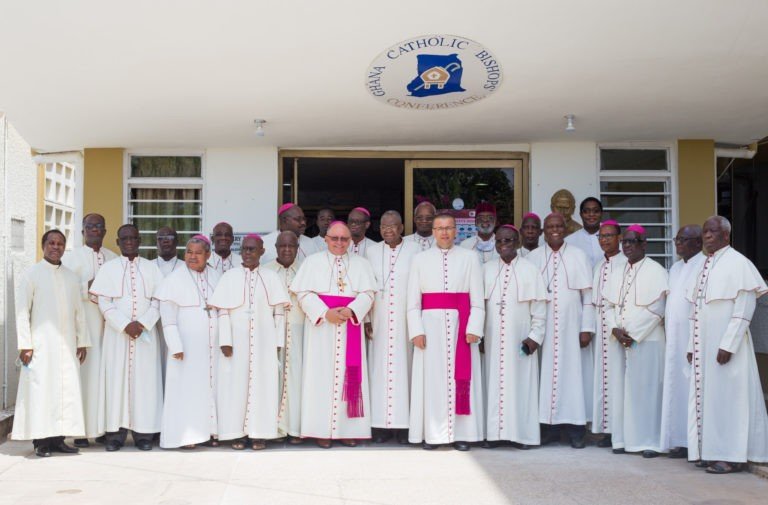
The Ghana Catholic Bishops’ Conference (GCBC) has called on Ghanaians, particularly Christians to shun acts of evil during and after the celebration of this year’s Easter festivities.

A statement signed by the Most Rev. Philip Naameh, President, GCBC, said “let us…renew our commitment to reject any acts of evil, including acts of war, conflicts and any actions, which will lead to the senseless loss of lives and the creation of needless crises.”

“Easter is significant for us because the resurrection of Jesus Christ from the dead is a source of hope and new life for Christians, and indeed, for all mankind,” the statement added.

This year, the Ghana Catholic Bishops’ Conference is celebrating Easter on the theme: “Returning to Galilee, finding the path to peace and hope in a time of crisis.”

It asked Christians to see the resurrection as a call to the world to do all to break the barriers that “kept us separated or divided.”

“In the resurrection, all of us are invited to live and share in God’s life of glory and find God’s path that leads to peace.

“Unfortunately, this gift of the Prince of Peace is often rejected by acts of conflicts, wars and division.

 Thus, when we look all around us, we see conflicts, wars, and the horrors associated with these acts of evil,” it noted.

The Conference said God had created from all the races of the world, one common race and one family for Himself and that the uneasy calm at Bawku, the Russia-Ukraine war and other conflicts and wars around the world must be addressed.

The statement admonished Christians to pray fervently to God for peace and an end to the Russia-Ukraine war.

“Let us never get tired of praying for peace, because a Church on its knees is stronger than an army on its feet,” it added.

The Conference also urged the citizenry to continue to deal with difficulties posed by the COVID-19 pandemic and protect themselves and others always.

Takoradi Area Inaugurates Chieftaincy Ministry

0

The Takoradi Area of The Church of Pentecost, under the leadership of Apostle Joseph Assabil, has inaugurated the Chieftaincy Ministry in the Area to provide chaplaincy services to chiefs, queens and royals in the church.

The ceremony took place recently at the A.T. Nartey Memorial Temple in Takoradi.

Addressing the congregants, Apostle Joseph Assabil said that the chieftaincy institution, described as the ‘soul of the nation’, plays an integral role in the nation.

“The cultural heritage we have as Ghanaians is our chieftaincy institution, which has been in existence for many years now, providing leadership for the Ghanaian society and at community levels,” he stated.

He encouraged the chiefs and queen mothers in the church to submit and rely solely on God as traditional rulers of the land.

Referring to Romans 13, he further admonished Christians to show respect to the traditional leaders, since they have been positioned in the communities by God to lead.

“Christians must desist from the common practices where people use all forms of media to perpetuate falsehoods on people in authority,” he explained and added that: “Such behaviour is unchristian and must not be emulated by others.”

Nana Kofi Abuna V, Chief of Essipong, who is a Member of the National Executive Committee of the Chieftaincy Ministry and special guest of honour, admonished Christian royals to be bold and avail themselves for enstoolment anytime the opportunity comes, bearing in mind that God is with them.

He said: “Use the opportunity to transform lives and communities with Kingdom principles and values.”

A 7-member Area Chieftaincy Committee was inaugurated to steer the affairs of the ministry in the Area.

The committee is chaired by Nana Kwasi Agyeman IX (Paramount Chief of Dixcove Traditional Area), with Nana Arhinful (Obomsu Adansi), Nana Hemaa Ekua Daayee (Nifahene Hemaa of Tarkwa Nsuaem), Elder Philip Cudjoe (Royal, Fijai Traditional Area), Elder Edward Essuman (Royal, Kwesimintsim Traditional Area), Pastor Stephen K. Asuo (Pentecost Men’s Ministry Representative), and Pastor Capt. Godswill M. Gatorwu (Chaplaincy Ministry Representative), as its members.

The Chairman, Nana Kwasi Agyeman IX, in a brief response expressed his gratitude to God, the Area Head and membership of the church for making the inauguration a success.

“On behalf of my colleagues, I pledge that we would discharge our outlined duties to the best of our abilities and competencies. Nevertheless, we would respectfully like to plead with leadership and members to give us their unflinching support to enable us serve the Lord and the church well,” he pledged.

The Chieftaincy Ministry was inaugurated as part of Vision 2023 (a five-year strategic plan of The Church of Pentecost), charged to mobilise and educate royals in the church, to influence their spheres with the values and principles of the kingdom of God.

Also present at the event were Mrs. Rebecca Assabil (Wife of Takoradi Area Head), Pastor Stephen Okyere Acheampong (Takoradi Area Secretary and Effiekuma District Minister), Deaconess Dr. Gladys Quartey (National Women’s Ministry Executive Committee Member), Pastor Philip Kwashie Ackumey (Pentecost Men’s Ministry National Executive Committee Member and Apremdo District Minister), and Deaconess Sarah Ama Appiah (Takoradi Area Women’s Ministry Leader), as well as the Area Pastorate and their wives.

Chartered presidential travels in ‘poor’ Ghana akin to going to farm in kente – Prof Adei

0

Prof. Stephen Adei is concerned about the spate of waste by successive governments. He believes our governments must learn to live by austere standards especially for a poor country like Ghana.

The former GIMPA lecturer cites how leaders of some developed nations even resort to flying commercial and with slim entourages unlike what is seen in the case of Ghanaian presidents.

“We are a poor country and, so, whether it is Mahama or Akufo-Addo, it is not about flying around in a presidential jet because when you go to countries like Australia and other developed countries, their prime minister, for instance, uses a commercial flight.

“He doesn’t move with a huge entourage made up of 40 people and, so, I believe we have become like a poor man who goes to the farm bedecked in a kente cloth”.

He is quick to add that his critique is not of the current government and for that matter President Nana Addo Dankwa Akufo-Addo: “It is not just this government. It is something I’ve said over and over again.

“If you’re poor and you wear a piece of kente cloth to the farm, it is not a good thing”, Prof Adei stressed.

He made the comments in an interview last week on Accra FM, where he discussed a range of governance and economic issues.

Interpretation of the law must not always be one-sided – Kan Dapaah to Judiciary

0

Minister of National Security, Albert Kan-Dapaah, has spoken about the importance of a robust and fair judicial system in maintaining the peace and stability of the country.

According to him, a strong judiciary was a pillar in the peace process because it will afford people the opportunity of using the courts to seek justice instead of taking the laws into their own hands.

He made these comments during a meeting last week with members of the judiciary to discuss the role of the third arm of government in Ghana’s national security architecture.

“If you are going to be able to address the security challenges that we have, especially the domestic ones, we need to ensure that there is a judicial system that works. If you do not have a judicial system that works, many people will simply take the laws into their own hands and misbehave and do what they want.”

He noted that Ghana had a positive perception within the sub-region, a perception that needed to be sustained and consolidated: “Therefore, in trying to manage the security situation, it is important for us that we do get a judicial system that works and we are all lucky that within the sub-region, we are perceived as a country where the judicial system works and where you could expect justice.”

He continued with an admonition, “If the interpretation of the law is tilted in our favour all the time, people will start accusing the judiciary and will not have the confidence that they need.”

The comment about perceived lopsided interpretation of the law has generated lots of reactions on social media with some people asking whether it was a tacit admission that the judiciary was doing the bidding of government.

Free SHS policy producing quantity, not quality – Prof Addae Mensah

0

Prof. Ivan Addae Mensah, a former Vice-Chancellor of the University of Ghana, has added his voice to those calling on the government of Ghana to review its flagship free SHS policy.

According to him, since the introduction of the policy by the Nana Addo Dankwa Akufo-Addo led government, it has only produced quantity and not quality students.

He, then, charged the government to reconsider reviewing the policy to make it more sustainable because sacrificing quality for quantity is not the way to go.

Prof. Addae Mensah reiterated noted the low quality of products of the free SHS has been reflected in the number that makes it to the two premier medical schools in Ghana.

He explained, “out of the over 720 senior high schools in the country, only 110 of them have had their students make it to the two traditional medical schools at the Kwame Nkrumah University of Science and Technology (KNUST) and the University of Ghana.”

“We have to look at it again. I think that there are certain schools which we should make autonomous and fee-paying and people will go there, but then make sure there are good community schools for everybody else. So the Achimota’s and the Wey Gey Hey’s, which people want their children to go, let them pay,” Prof. Addae Mensah noted.

The former Vice-Chancellor of the University of Ghana, then, advised the government to focus on replicating what makes the few schools perform better instead of establishing STEM schools.

Prof. Ivan Addae Mensah is not the only one who is advocating for a review of the government flagship free SHS.

Professor Stephen Adei, an economist and the Chairman of the National Development Planning Commission, had earlier called on the government to review its flagship programme.

In an interview with Joy News, the former Chairman of the Ghana Revenue Authority explained, “Only a small proportion of the poor come to Achimota, let the rich go there and pay. Use the Achimota funds to have very good schools in every district so that they can be there and don’t have to travel. They just come from the villages.”

Also Kennedy Nyarko Osei, Akim Swedru MP, in a Facebook post proposed that since the country is experiencing some economic difficulties, it will be prudent for the government to suspend its flagship free SHS policy.

Meanwhile, the Finance Minister, Ken Ofori-Atta has said the government has no intention of “rolling back” its flagship Free Senior High School (SHS) programme.

“Let me say this, President Nana Addo Dankwa Akufo-Addo has absolutely no intention to roll back on a major policy like Free SHS.

“We see education as the best enabler for sustainable economic growth and transformation and will do more to improve on it for it to serve more and better our children,” he stated at a press conference on Tuesday, March 22.